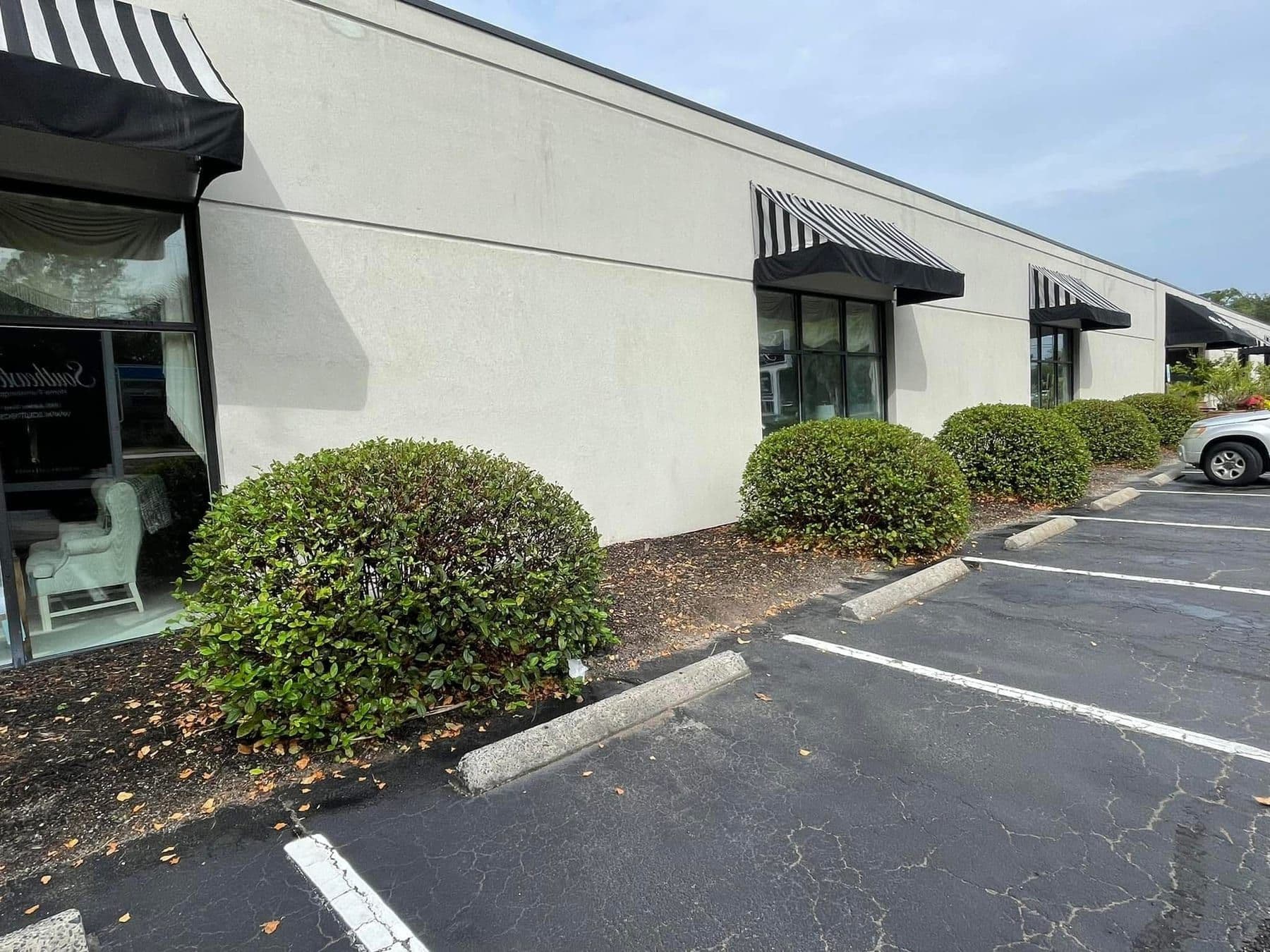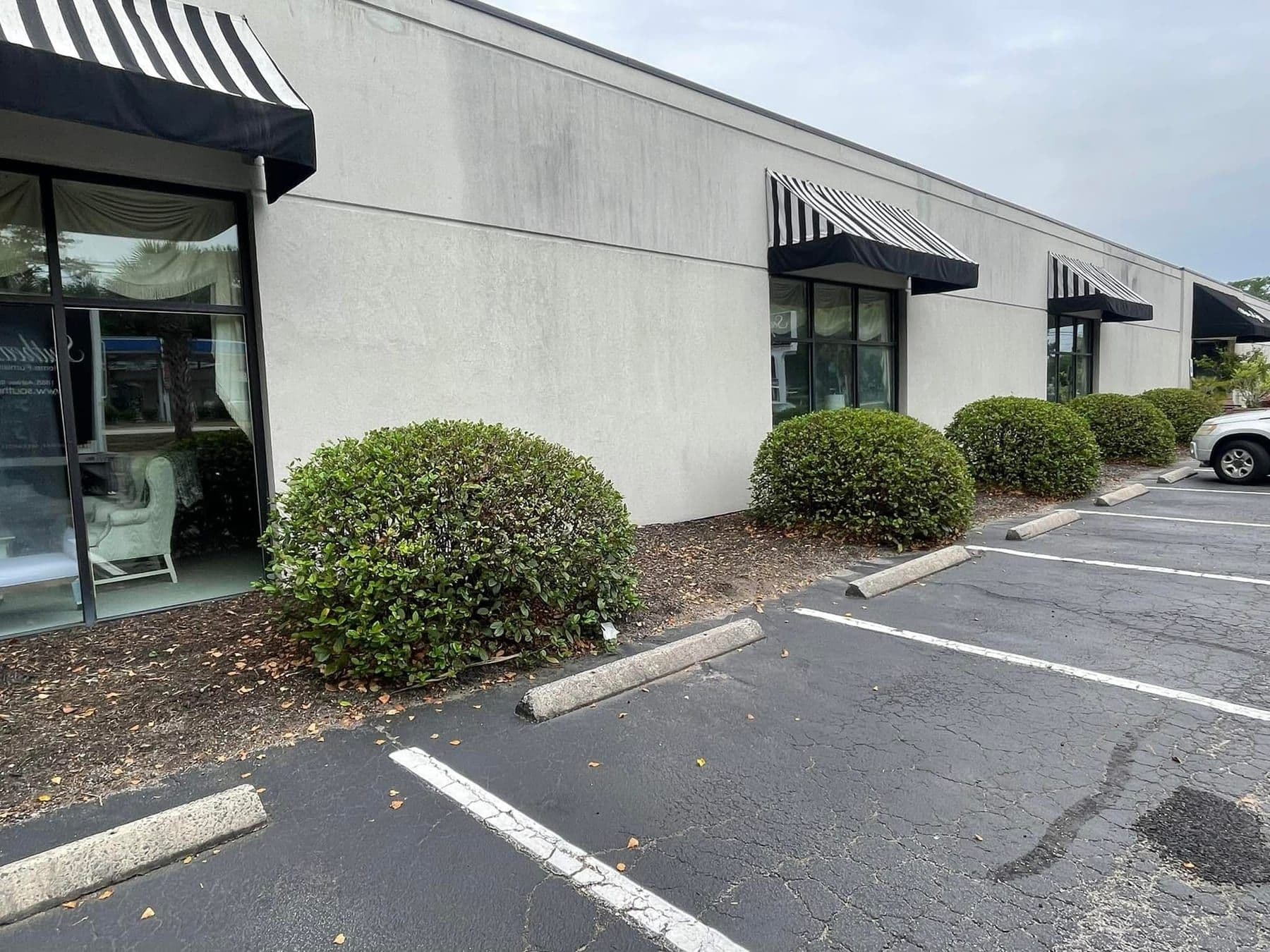
A tenant emails me about the filthy entry at their shop. Two days later the property manager emails me about the same entry, and the two of them disagree about who is buying. Nothing happens. I have watched a storefront sit dirty for close to two years that way, with both people acting in good faith, which is exactly what makes this argument so hard to end.
So here is the answer before you read further. The City of Charleston does not settle it, and there is no market rule that settles it either. Your lease settles it. The allocation principle the industry uses is benefit: in its 2018 law conference materials on triple net charges, the International Council of Shopping Centers says charges attributable to areas or improvements benefitting a specific tenant "should be fully allocated to the benefited party," with shared expenses split proportionately. Whether your storefront counts as your area or as common area is a drafting outcome, not a legal default. Go read your own Common Area definition before you accept anybody's answer, mine included.
Charleston's code names all four of you and picks none
People hunt for a sidewalk duty in the streets chapter and come up empty, because Charleston retitled Chapter 28 from "Streets and Sidewalks" to "Streets and Drainage" back in 1988. The duty lives in the garbage chapter. Section 14-5 of the city code makes it "the duty of the owner, agent, occupant or lessee to keep exterior private and public property free of litter and unsightly growth," and subsection (b) pushes that out "up to, and including, the curb, gutter or street line" for any property fronting a city right-of-way. Chapter 14's definitions put sidewalks inside "public property."
Read that list again. Owner, agent, occupant, lessee, jointly, with no tiebreaker. The City points downtown businesses at this same section on its Central Business District resources page without resolving the split, because the ordinance was never written to resolve it.
Two limits. Sec. 14-5 reaches litter and unsightly growth, and I could not find anything in the code requiring anyone to deep clean grime, gum or soot, so do not let a vendor tell you the City mandates a wash schedule. And the enforcement has teeth on the owner's side: sanitation can serve written notice to correct within five days, failure is grounds for prosecution, a Chapter 14 violation carries a fine up to $500 or up to thirty days, and if the City corrects the condition itself the cost becomes a lien against the real property. That is the landlord's asset, even where a tenant caused it.
Triple net, gross, and the word your lease uses
Holland & Knight's leasing group lays out the three structures: a triple net lease passes the landlord's operating expenses through to the tenant, a gross lease bundles them into one fixed monthly number, and a modified gross lease is the hybrid you see in multi-tenant projects. CAM and maintenance sit on the tenant under NNN and on the landlord under a true gross lease.
One vocabulary check that saves arguments. ICSC's 2025 CAM workshop puts it in a footnote: retail leases speak of "common area costs," while "operating expenses" is the office-leasing concept, because office buildings carry a lot of space that is neither tenant space nor common area. So if your lease says operating expenses and never says CAM, that is probably why you cannot find it.
What CAM normally covers, and where the fight starts
Cleaning and sweeping are ordinary CAM line items. The 2025 ICSC law conference materials list cleaning and sweeping alongside trash removal, lighting, restriping, landscaping, exterior repainting and an administration fee usually equal to 10 to 15 percent of CAM costs. ICSC's small-business guide to CAM adds the mechanic tenants care about: your share is your square footage divided by the building's.
The fight starts at the definition. The 2018 ICSC paper notes landlords tend to draft Common Area broadly, sometimes reaching "exterior surfaces of Shopping Center buildings" and "pedestrian sidewalks," while tenants push for narrow definitions.
Timing matters too. CAM is billed on an estimate and trued up later, so a cleaning line added mid-year usually surfaces on a reconciliation statement rather than as its own invoice. Tell your tenants that before they see it. It is one reason Shopping Center Cleaning goes smoother when scope is agreed in writing at the property level first.
Who cleans the public sidewalk out front
Not the state. South Carolina's Title 5 chapter on streets and sidewalks contains an assessment mechanism for permanent improvements and no cleaning duty for abutting owners.
Physical repair is a City job. Charleston's Streets and Sidewalks Division lists sidewalk repair, replacement and ADA accessibility work among its services and takes reports at 843-965-4130.
Washing is murkier. On King Street, the City's 2022 memorandum of understanding with the Charleston Downtown Alliance describes baseline service as "pressure washing sidewalks as needed," qualified by "as staff levels permit." That is not a schedule and you cannot plan around it. The BID Ambassadors are not a backup either. Their published scope is litter, trash receptacle wipe-downs, handbills and stickers on utility poles, small graffiti tags on public infrastructure, weeds and biohazard. Storefront and sidewalk washing is not on that list.
What is actually stuck to a retail sidewalk
This part is useful whether you hire anybody or hand it to your own porter.
Sweep and bag first, before anything gets wet. Sec. 14-5(c) makes it unlawful to sweep or push litter from buildings, property or sidewalks into the street and the storm drainage system, and requires sidewalk sweepings to be picked up and containerized. Blowing debris into the gutter is itself the violation.
Then you are dealing with four things:
Gum. A mechanical bond that needs softening, not force. Cold water at high pressure will eventually pop it and leave a clean halo around every spot, which reads worse than the gum did.
Sugar. Sweet tea, soda, spilled frozen drinks. Invisible when dry, sticky when wet, and it holds grit that darkens the slab in a traffic pattern.
Grease. Tracked out of a food tenant's door on shoe soles, fanning out from the threshold.
General traffic soiling. National Park Service Preservation Brief 1 separates ordinary dirt and pollutant soiling from soot and smoke, which it says need a different approach.
Chemistry beats pressure on three of those four. Brief 1 says non-ionic detergents are "especially effective in removing oily soil," and that adding a detergent or surfactant to a low or medium pressure wash, then rinsing, is a useful aid. It also says to scrub with natural or synthetic bristle, never metal, which leaves particles that stain. We run plant-safe surfactants and biodegradable detergents for the same reason.
Why hot water and a surface cleaner beat a wand
Brief 1 calls steam cleaning what it really is, low-pressure hot water washing, and calls it "a gentle and effective method for cleaning stone." It also says steam "can be especially useful in removing built-up soiling deposits." That brief is about masonry buildings, not concrete flatwork, so treat the second half as the part that carries over. Heat does work that pressure cannot. It softens gum and thins grease so the surfactant can lift it instead of driving it into the pores.
The surface cleaner is geometry. A wand concentrates everything into a narrow line the operator sweeps by hand, so dwell varies with the arm and you get zebra striping across the walk. A surface cleaner holds its bars at fixed height with constant overlap, under a shroud that keeps the water where you can squeegee and recover it rather than letting it run to the gutter.
Here is the honest limit on our own method. Hot water plus recovery costs more per visit than a cold trailer and a hose bib, and on a plain concrete walk with no gum and no grease you would not be able to tell which one we used. I say so when that is the case.
Where the wash water goes
Charleston Code sec. 28-3 makes it unlawful to drain or discharge grease, oil, gasoline or other petroleum products onto any right-of-way or into any storm drainage system, and sec. 28-7 bars dumping trash, landscape debris or other material into any stream channel, pond or basin that carries or stores stormwater. That is the rule a food tenant breaks by hosing a greasy entry toward the curb. It matters because, as EPA explains, a municipal storm sewer system discharges to surface water without treatment.
There is a federal layer as well. 40 CFR 122.34 requires regulated small MS4 permittees to effectively prohibit non-stormwater discharges through ordinance and to enforce it. The local section is the one you would actually be cited under.
If you need a reason that has nothing to do with your lease, 29 CFR 1910.22 requires walking-working surfaces at a place of employment to be kept clean, orderly and sanitary, and free of hazards including spills. A slick entry is an OSHA problem before it is a curb-appeal problem.
Older downtown buildings need a lighter hand
Charleston's Board of Architectural Review has existed since 1931 and reviews work visible from the public right-of-way, with most minor items handled at staff level. Its Charleston Standards require treatments "undertaken using the gentlest means possible." Its 2007 policy on mechanical tools strongly discourages waterblasting in the context of paint removal, and expressly carves out cleaning as routine maintenance. It is not a ban on washing. Anyone who tells you it is has not read it. The consequences for gouging or pitting historic fabric are printed in capitals: immediate stop work order, permit revoked, sometimes a municipal summons.
No City document I found carries a pressure number. The numbers are federal. Preservation Brief 1 says start at 100 psi or below and go "generally no higher than 300-400 psi." It warns that mortar joints, lime especially, erode under abrasive cleaning, and that joints can be up to 20 percent of a brick wall surface. If a wall was repointed recently, Preservation Brief 2 says let the mortar fully harden, thirty days usually sufficient. Brief 1 also sets two preconditions worth putting in a scope: joints sound, building watertight.
The fix that actually ends the argument
One vendor, one written scope, one schedule, billed to whoever the lease names. Write the split down before the first visit: facade and entry glass and the recessed vestibule on one line, the shared walkway and the curb line on another, each with its own frequency. Then whichever party pays, the work happens on the same night by the same crew, and nobody is standing in the doorway arguing about a seam in the concrete. Ask any Storefront & Sidewalk Cleaning vendor for a certificate of insurance before they start. We carry $2,000,000 general liability, send the COI in advance, and name the client additional insured when a property manager requires it. If something is not right, we come back.
Start with the lease, not the vendor
Pull the lease and find two things: the Common Area definition, and the CAM exclusions. That tells you which side of the line your storefront sits on. If an ordinance question comes up, call the City rather than guessing. Once the split is clear, send us the property details or call 843-696-4739 and we will scope it either way, tenant-paid or CAM.