If you run a restaurant here, you probably picture the inspection as a kitchen event. Thermometer in the walk-in. Hands in the three-compartment sink. Dates on the containers. That is most of it. It is not all of it.
South Carolina's retail food regulation defines "premises" to include the land under the permit holder's control, then puts standing requirements on refuse surfaces, enclosures, pests and litter across it. Your pad, your corral and the apron where the line props the door open at 10pm are inside that reach. Whether an inspector writes any of it up is that inspector's call, and nobody selling you something can predict it.
The agency changed in 2024, the rules did not
Inspections here are run by the South Carolina Department of Agriculture, not DHEC and not the environmental agency. SCDA's published copy of Regulation 61-25 states that after July 1, 2024, "all references to DHEC must be construed as references to SCDA," and the state's food grades lookup tool splits its records on that same date. SCDA said at the time that "the food safety regulations aren't changing, but the public will see some changes." Same 61-25, new agency. If your GM still tells new hires that DHEC is coming, fix that. SCDA inspects roughly 24,000 retail food establishments statewide on a risk-based schedule. Statewide, not local.
Where the outside shows up on the scored form
South Carolina scores by deduction. Weighted violation points come off 100, and section 8-403.10 sets the bands: Grade A is 88 to 100, Grade B is 78 to 87, Grade C is 77 or less.
Two line items on the current report, CPD Form #2114, reach past the back door:
Item 36, "Insects and rodents not present; no unauthorized animals," worth 2 points.
Item 52, "Garbage and refuse properly disposed; facilities maintained," worth 1 point.
I can tell you those items exist and what they are worth. I cannot tell you how often inspectors here write up exterior refuse conditions, or what crosses into a circled point value. That is not published anywhere I could find, and it is a judgment call in the field. If a bidder says a greasy pad costs you a specific number of points, they made it up.
"Premises" is the word doing the work
61-25 defines premises as "the physical facility, its contents, its land, and any adjacent or bordering contiguous land or property under the control of the permit holder." The land is in.
Two blunt sections travel outside on that definition. Section 6-501.111: "The premises shall be maintained free of insects, rodents, and other pests," including eliminating harborage conditions. Section 6-501.114: the premises shall be free of litter and of items unnecessary to the operation.
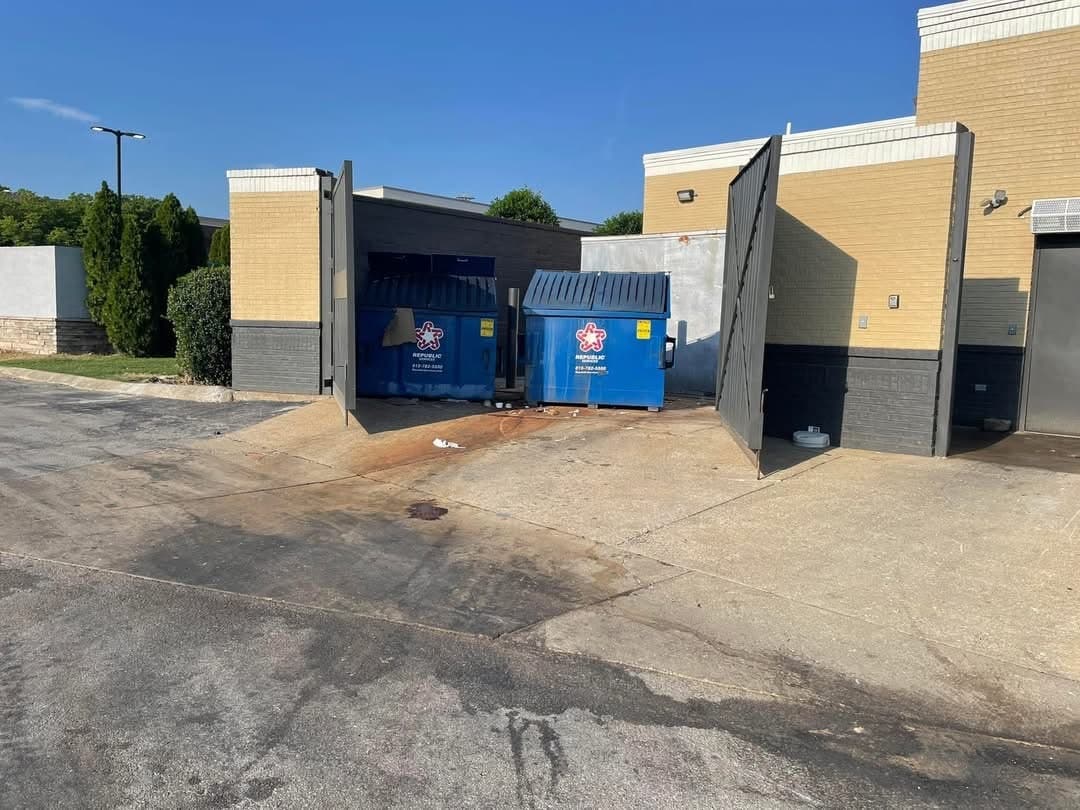
Standing grease under the container, a slick apron at the kitchen door, broken pallets against the fence. Nobody needs a dirty-concrete rule to start that conversation. Reports are public under section 8-403.50, and the Department posts the grade decal where consumers can see it.
What 61-25 says about the refuse area
The part I would print and tape inside the office door:
The outdoor refuse storage surface "shall be constructed of nonabsorbent material such as concrete or asphalt and shall be smooth, durable, and sloped to drain" (5-501.11).
An outdoor enclosure, if used, "shall be constructed of durable and cleanable materials" (5-501.12). Cleanability sits inside the construction standard.
The area and enclosure stay "maintained free of unnecessary items... and clean" (5-501.115) and in good repair (5-501.111).
Outside receptacles need tight-fitting lids, doors or covers, and a compactor must be installed so effective cleaning is facilitated around it, and under it if the unit does not sit flush with the base pad (5-501.15). Drain plugs stay in (5-501.114).
Refuse is stored so it is "inaccessible to insects and rodents" (5-501.110).
Frequency is the first thing operators ask about, and there is no fixed interval. None. Receptacles get cleaned "at a frequency necessary to prevent them from developing a buildup of soil or becoming attractants for insects and rodents" (5-501.116), and refuse leaves at a frequency that minimizes odors and pest conditions (5-502.11). Performance standard, not a calendar. Anyone selling you quarterly because the state requires quarterly is wrong. Quarterly may still be right for your building; the reason would be grease volume and pest pressure.
The oddest provision is 5-501.18. It names the implements to keep available, "high pressure pumps, hot water, steam, and detergent," for receptacles and waste handling units, then allows off-premises cleaning services if approved. Read the scope. That is receptacles, not your pad and not your sidewalk. It does show the state writing hot water and high pressure into its own text.
The narrowing that keeps everyone honest
"Physical facilities" is defined in 61-25 as "the structure and interior surfaces of a retail food establishment," plus accessories like soap dispensers. Interior. So form item 53, "Physical facilities installed, maintained, and clean," is not your dumpster pad, and 6-501.12(B), the line about cleaning "during periods when the least amount of food is exposed, such as after closing," applies inside. We schedule exterior work after close constantly. Good practice, not a rule I can cite at you.
How we clean a pad, a corral and a back door apron
Dry first, then heat, then flow
Clemson Extension's fact sheet on fats, oils and grease pollution gives food service two instructions that belong together: dry clean grease with food grade paper rather than soaking it with water, and designate a safe equipment washing area that does not lead to a storm drain. We scrape and absorb the heavy deposits before a hose comes out.
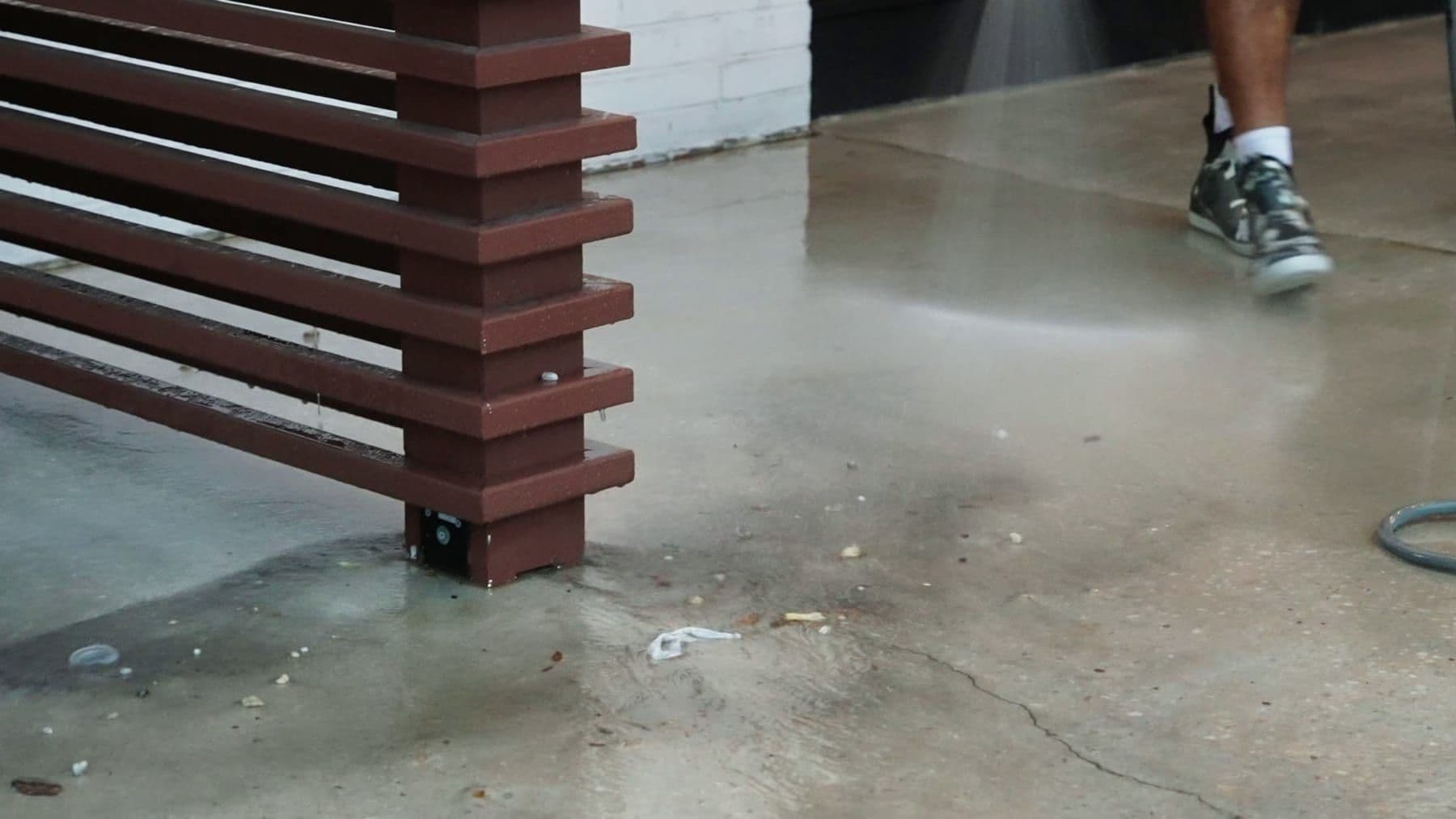
Then heat. Most restaurant pressure washing in Charleston fails the same way, cold water and a narrow tip against baked grease. Grease answers to temperature and chemistry, not to a needle jet. We run around 180 degrees at the surface, lay down a biodegradable degreaser, and give it ten to fifteen minutes before anything spins. A surface cleaner at roughly 4 GPM then spreads the work across a rotating bar instead of etching a stripe. Plant-safe surfactants, since landscaping sits a few feet from most corrals.
The sidewalk nobody assigned to anybody
Everybody knows about the dumpster. Almost nobody thinks about the ten feet of walk outside the kitchen exit. Cooks carry bus tubs through that door and bags drip on the way to the container. Two seasons later that concrete is black, slick in the rain, and feeding whatever lives in the shrub line. Slip exposure and pest attractant at once, and usually the cheapest thing on the property to fix.
Where the water goes
This is where commercial kitchen exterior grease stops being a housekeeping question. EPA's fact sheet on FOG discharges from food service establishments carries EPA's Report to Congress finding that grease from restaurants, homes and industrial sources is the most common cause of reported sewer blockages, at 47 percent, and notes that federal pretreatment rules prohibit "solid or viscous pollutants in amounts which will cause obstruction." South Carolina's MS4 permit framework treats non-stormwater discharges as illicit except a short listed set, and commercial pavement wash water is not on that list. Charleston has had restaurants in view for a while: the City's 2014 stormwater plan describes a program begun in 2010 handing out restaurant BMP guidance downtown, aimed at grease, mop water and leaking dumpsters.
So we contain and recover, and greasy water does not go to an inlet. Where recovered water is allowed to go depends on the site and the sewer authority, so call Charleston Water System and read your lease before you assume. I went deeper into that in this piece on wash water and stormwater rules on a dumpster pad. While you have them on the phone: their grease trap requirements call for traps pumped or cleaned at least four times a year, or at a frequency their inspector sets, with a maintenance log and a 100 mg/l discharge limit. The concrete around that trap is our work. The trap is not.
Scheduling around service
Most of this happens after close or before the first delivery. Degreaser needs dwell time, the pad needs to dry, and nobody wants a wand running while a two-top eats on the patio. Under apartments or beside a hotel we flip to early morning, because a hot water burner at 1am wakes people up.
One thing I will not promise you
Concrete that has been absorbing fryer grease for a decade does not come back to new. We can lift the film, kill the odor, take away the slick and remove what the pests are eating. The shadow in the slab usually stays. A saturated pad behind a long-running kitchen off Rivers Avenue will look dramatically better and it will not look poured last month. If a contractor promises uniform, like-new concrete on a pad like that, ask what happens when it does not come out.
Two boundaries while I am at it. We work outside only: no hoods, nothing inside your kitchen, no trap pumping. And exterior cleaning is not a promise about a restaurant health inspection, outside or in. What lands on your report is between you and SCDA.
Walk the back of the building before somebody else does
End of a busy Saturday, not a slow Tuesday morning. Bring a flashlight.
Standing liquid under the container, and whether the pad still slopes to drain the way 5-501.11 assumes.
Corral walls and gates you could actually wash down, versus absorbent, broken material.
Lids and doors that close, drain plugs still in, and room to clean around and under the compactor.
A black traffic path running from the kitchen door to the pad.
Litter along the fence line, and droppings or burrows at the base of the enclosure.
Shared corral in a shopping center? Who cleans it is usually a lease and CAM question, and it varies by center. Read your lease, and for anything ordinance-related call the municipality. I am not the person to give you a legal answer on either one.
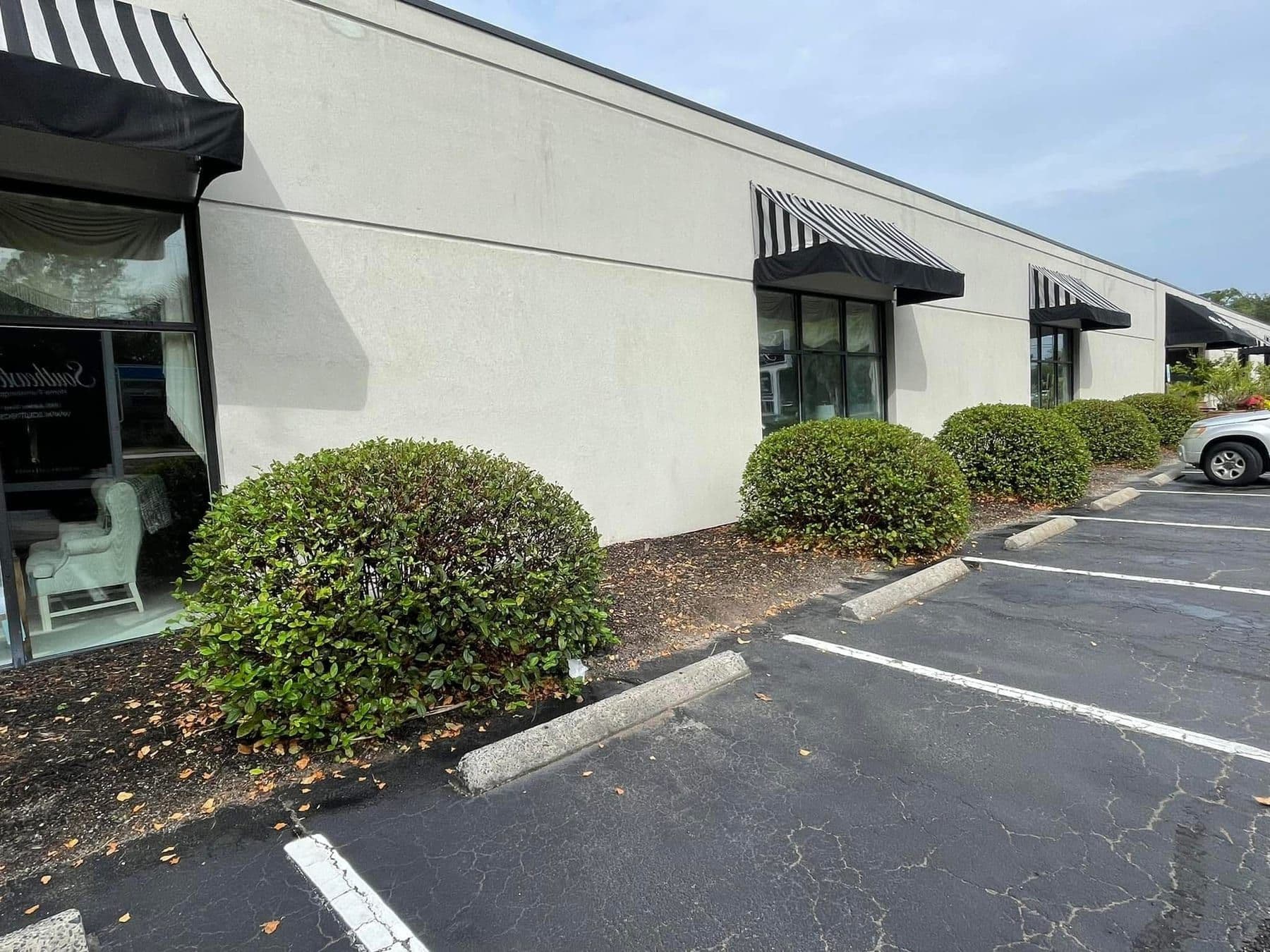
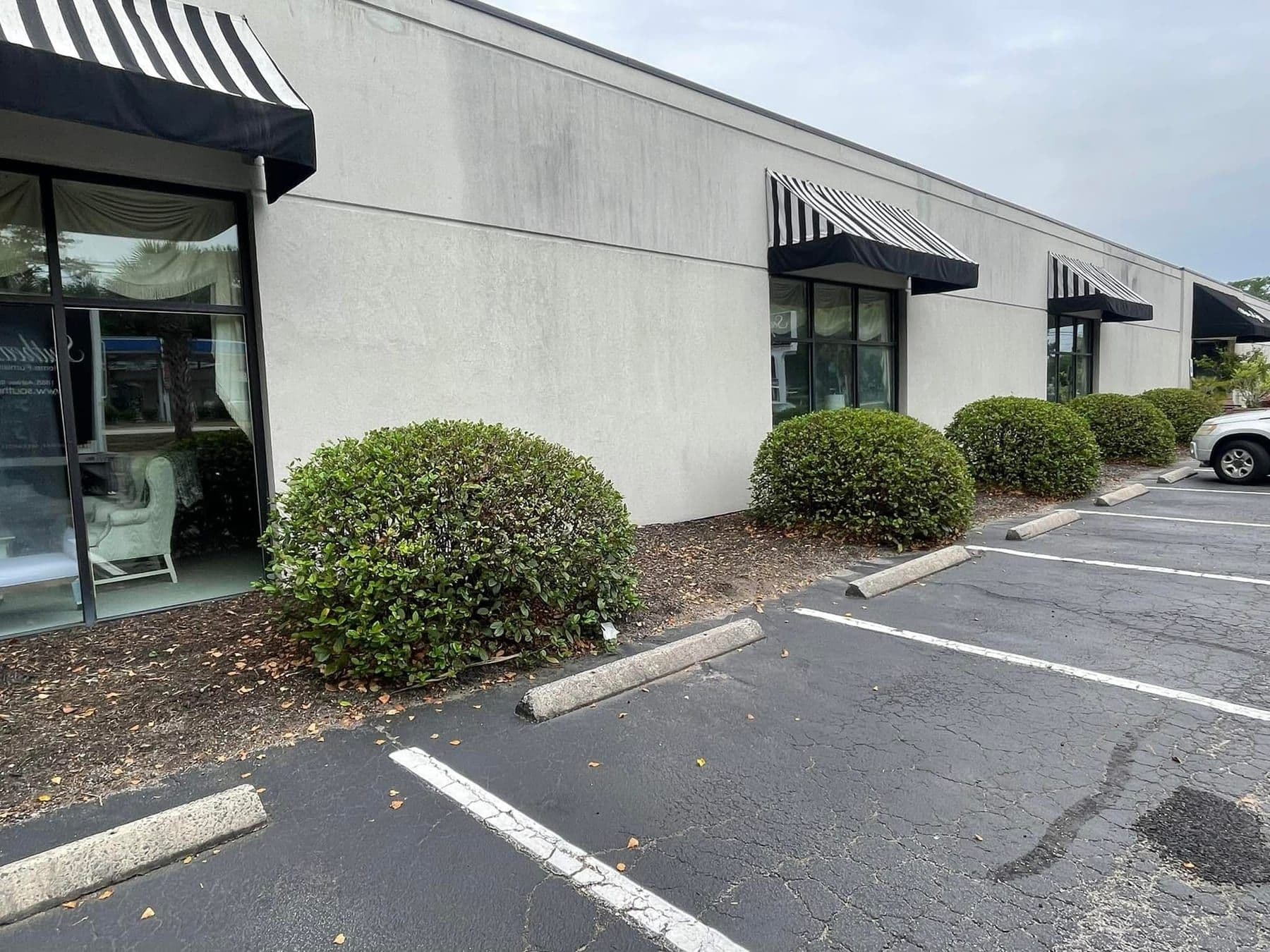
We work across Greater Charleston, from Park Circle and Northwoods out to Mount Pleasant, Summerville, West Ashley, Daniel Island, Goose Creek and James Island. Most of our restaurant exterior cleaning is pads, corrals, aprons and sidewalks, and dumpster pad and corral cleaning is a separate service line because it is the area that fails first.
The next step does not have to involve us. Do the flashlight walk this week. If it is worse than you expected, take photos and tell us what the back of your building looks like, or call 843-696-4739. We carry $2,000,000 in general liability and send the certificate of insurance before the crew shows up, and you can be named additional insured when your property manager requires it. If something is not right when we finish, we come back.