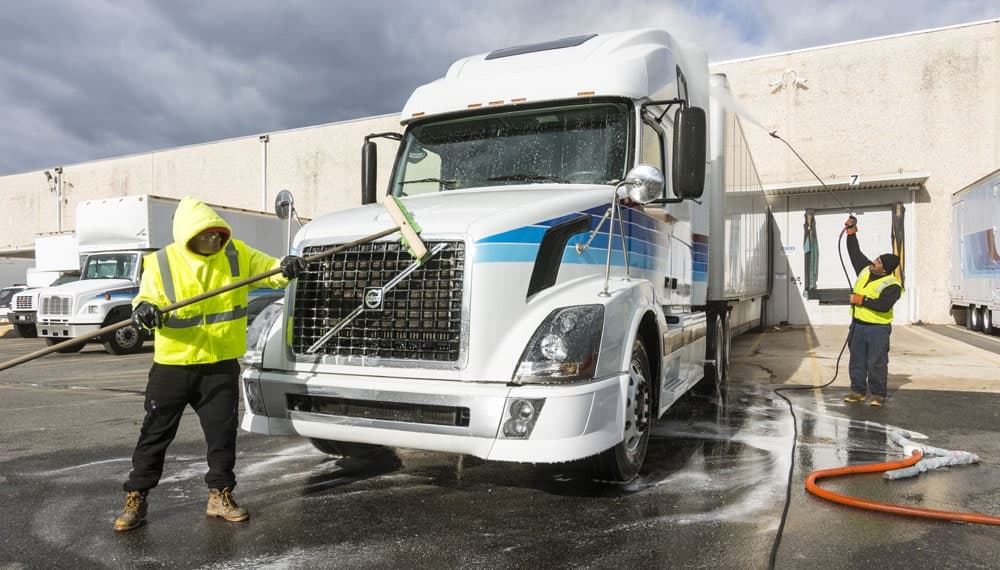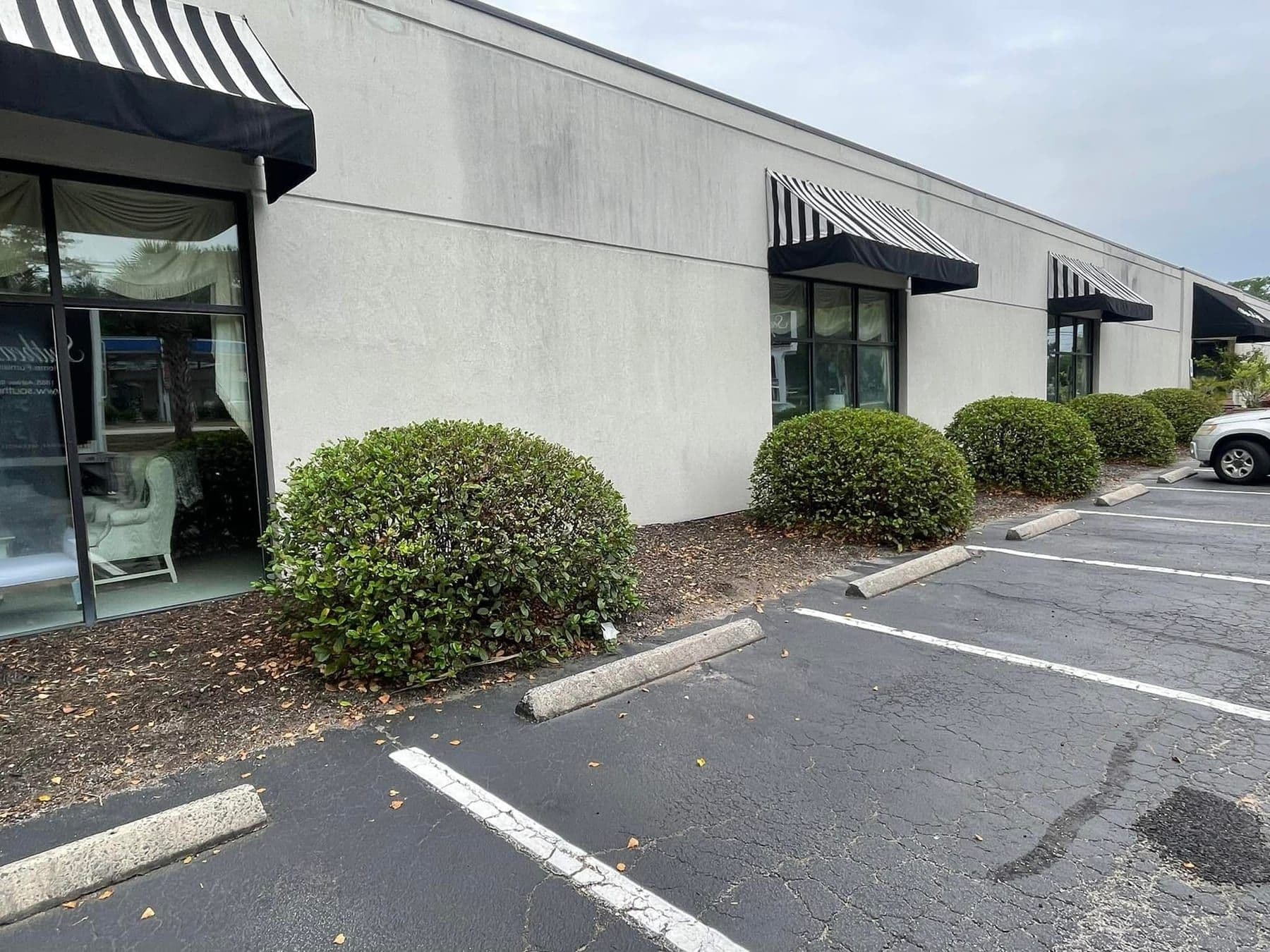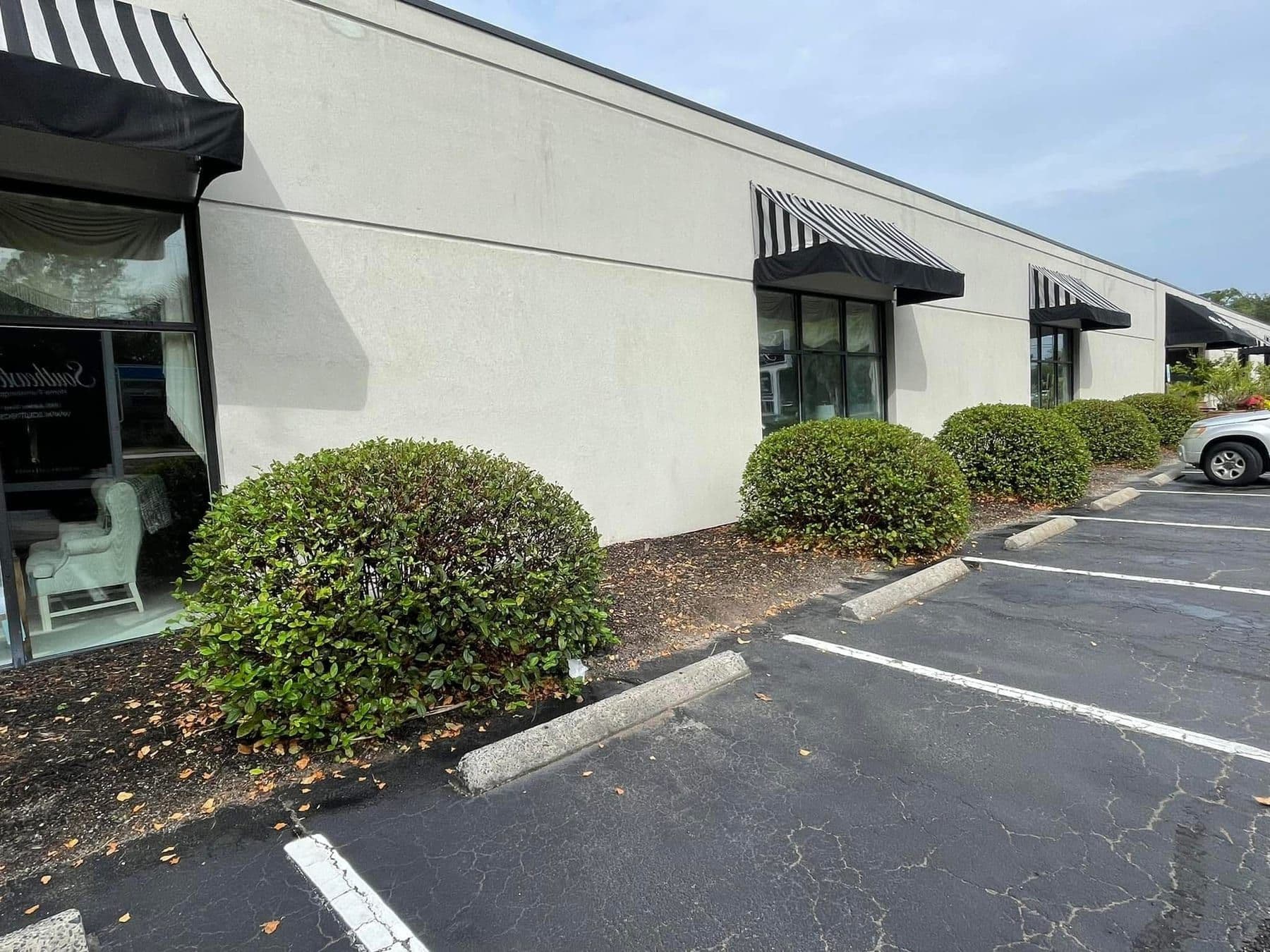
If you manage a building in North Charleston, what is dirtying it depends on which side of I-26 you sit on. That is not a positioning line. It changes the detergent, the water temperature, and how often I would put you on the calendar.
Short version, in case that is all you came for. Near the port and the interstate, treat exterior cleaning as a recurring film problem and buy frequency instead of one heroic deep clean. On Rivers Avenue the hard part is access and staging, not the surface. Around Park Circle it is grease, refuse areas and sidewalks in a district that never fully closes.
One note on scale, because commercial pressure washing in North Charleston covers a lot of ground. The city is the state's third largest, 126,005 people as of July 1, 2024 in the Census Bureau's estimates. Nobody publishes a business count for the city itself. The closest real figure is Charleston County's 15,801 employer establishments in 2023, and that county also holds Charleston and Mount Pleasant.
Near the port, you are buying frequency
Three of South Carolina Ports' terminals sit inside North Charleston: North Charleston Terminal, the Hugh K. Leatherman Terminal and Veterans Terminal. Wando Welch is in Mount Pleasant, which matters if you are writing a service address into a contract. The port routes trucks to North Charleston Terminal off I-26 to I-526, then N. Rhett Avenue to Remount Road.
Two things before I describe the dirt. Charleston County is not in nonattainment or maintenance for any criteria pollutant in EPA's Green Book, so nobody should sell you washing as an air quality fix. And the port's Clean Truck Program requires post-1993 engines on drayage trucks serving its container terminals. Low bar. Older diesel still works these roads.
What our crew finds is a grey film on the elevations facing traffic and on everything horizontal: dock aprons, bollards, curbs, the first ten feet of wall above the pavement. I cannot point you to a study tying that to the port, and I will not invent one. It is field observation. Researchers who sampled the Neck communities of Accabee, Chicora/Cherokee, Howard Heights and Union Heights, an area they called "an integral part of the primary industrial corridor for the metropolitan Charleston region", did note that differences between sampling sites may relate to how close the sampler sat to traffic. That matches what we see.
So on a distribution building, buy a written frequency tied to your inspection or tenant-tour calendar, not an annual wash that looks good for six weeks. Our Industrial & Warehouse Cleaning scopes are built that way on purpose.
Rivers Avenue is a construction corridor for years
Rivers Avenue is US 52, and two projects bracket this corridor. One rebuilt the cross street. The other has not broken ground yet. SCDOT broke ground on July 11, 2025 on the Ashley Phosphate Road Safety Improvements Project, on Ashley Phosphate Road from Rivers Avenue to Dorchester Road, adding raised medians, high visibility crosswalks, new pavement markings and better lighting, on a schedule that had it wrapping in summer 2026. That one is finished or close to it. What it leaves you is the medians. Behind it comes Lowcountry Rapid Transit, a 21.3 mile bus rapid transit line from Ladson down Rivers Avenue to the WestEdge development downtown, 20 stations, construction estimated 2027 to 2029.
For Rivers Avenue commercial cleaning the disruption is mostly ahead of you, not behind you. Transit construction is estimated for 2027 to 2029. That is years of lane shifts and dust, and it has not started. Do the lot, the walks and the building in one mobilization instead of three visits, and expect a new median to change where a truck and hose can stage.
I will not tell you what your building is made of; nothing I can cite supports a generalization about that corridor. What our crews most often find is painted masonry and coated finishes that streak or fail outright under pressure. So on elevations we work under roughly 500 PSI and let plant-safe surfactant do the work. Slower. It also does not strip your paint.
Park Circle: the work happens between close and open
The Olde Village District along and near East Montague Avenue is packed with locally owned dining, most of the restaurants with sidewalk seating, per the city's visitors bureau. Park Circle was laid out as a garden community in the early 1900s, which is why the blocks are walkable and the service areas behind them are tight.
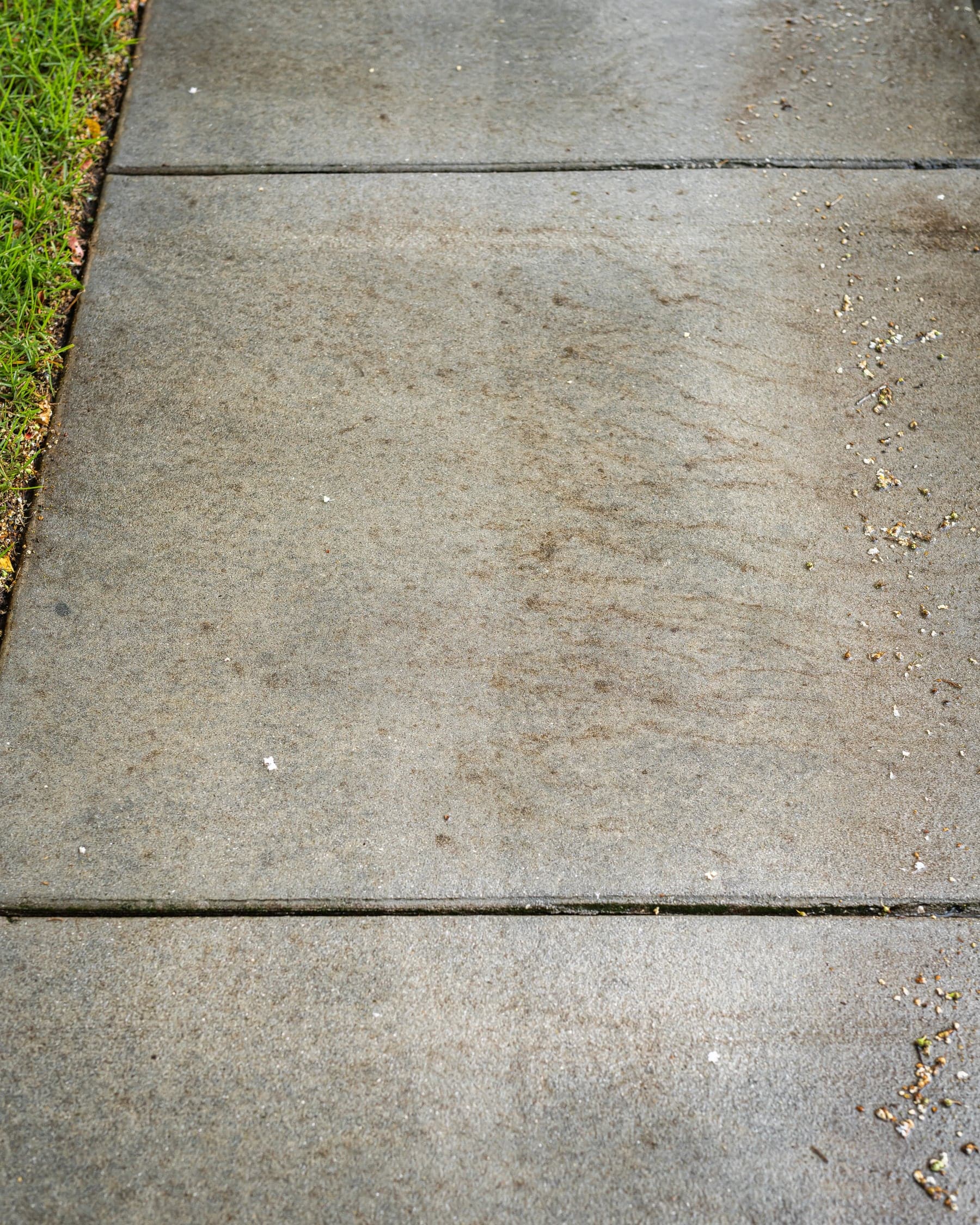
Park Circle business cleaning is mostly a scheduling problem, since there is no window while patios are seated. Grease is the surface problem: back-of-house pads, the path to the refuse area, the walk out front where it gets tracked and ground in. Cold water spreads it. We run hot, roughly 180 degrees at the surface, with a degreaser and real dwell time, then a surface cleaner on the flatwork. Where the wash water goes matters more here than almost anywhere, because the service area is often steps from an inlet, so read wash water and stormwater rules on a dumpster pad before you let anyone rinse toward the street. If your lease is vague about who owns the walk out front, read the lease or call the city. I am not the guy to interpret it for you.
The Montague and International Boulevard node
Charleston International Airport is physically in North Charleston, at 5500 International Boulevard, and the North Charleston Coliseum and Performing Arts Center sits at 5001 Coliseum Drive off I-26 Exit 213. Boeing South Carolina broke ground in November 2025 on a 787 site expansion of more than a billion dollars. Nothing in that node picks its own clean window. Flight banks, event load-in and shift change pick it, so tell us the calendar and we work around it.
How to scope this yourself, even if you never hire us
Split the estimate into horizontal and vertical line items. Flatwork and elevations run at different production rates and should not be one blended number.
Ask for PSI at the surface and water temperature, surface by surface. A bidder who answers "commercial grade" for everything has not walked your property.
On concrete, ask the machine's GPM and whether a surface cleaner is used. Volume moves dirt on flatwork; pressure alone leaves wand stripes you stare at for a year.
Find your water source before bid day. One weak hose bib means a buffer tank or a slower crew, and you want that priced up front.
Get a start hour, a stop hour and a rain plan in writing. Detergent that dries before rinse is worse than no wash.
Ask for the certificate of insurance before the crew arrives, and say at bid time if your property manager needs additional insured status. We carry $2,000,000 general liability and send the COI up front.
Where our approach falls short
We are a ground-based crew. Above a certain height on a tall elevation we cannot do good work from the ground, and past that point we say so and stay off it rather than blasting upward and leaving you a streaked wall. You hear that on the walk, not after the deposit.
A reasonable next step
Walk your property once at the hour you would want the work done, not at noon. Note what is greasy, what is grey, where the water drains and where a truck could park. That five minute walk is most of a scope. Send the photos and the constraints, check what we cover on the North Charleston Pressure Washing page, then ask for a written scope or call 843-696-4739 and tell me which corridor you are on.