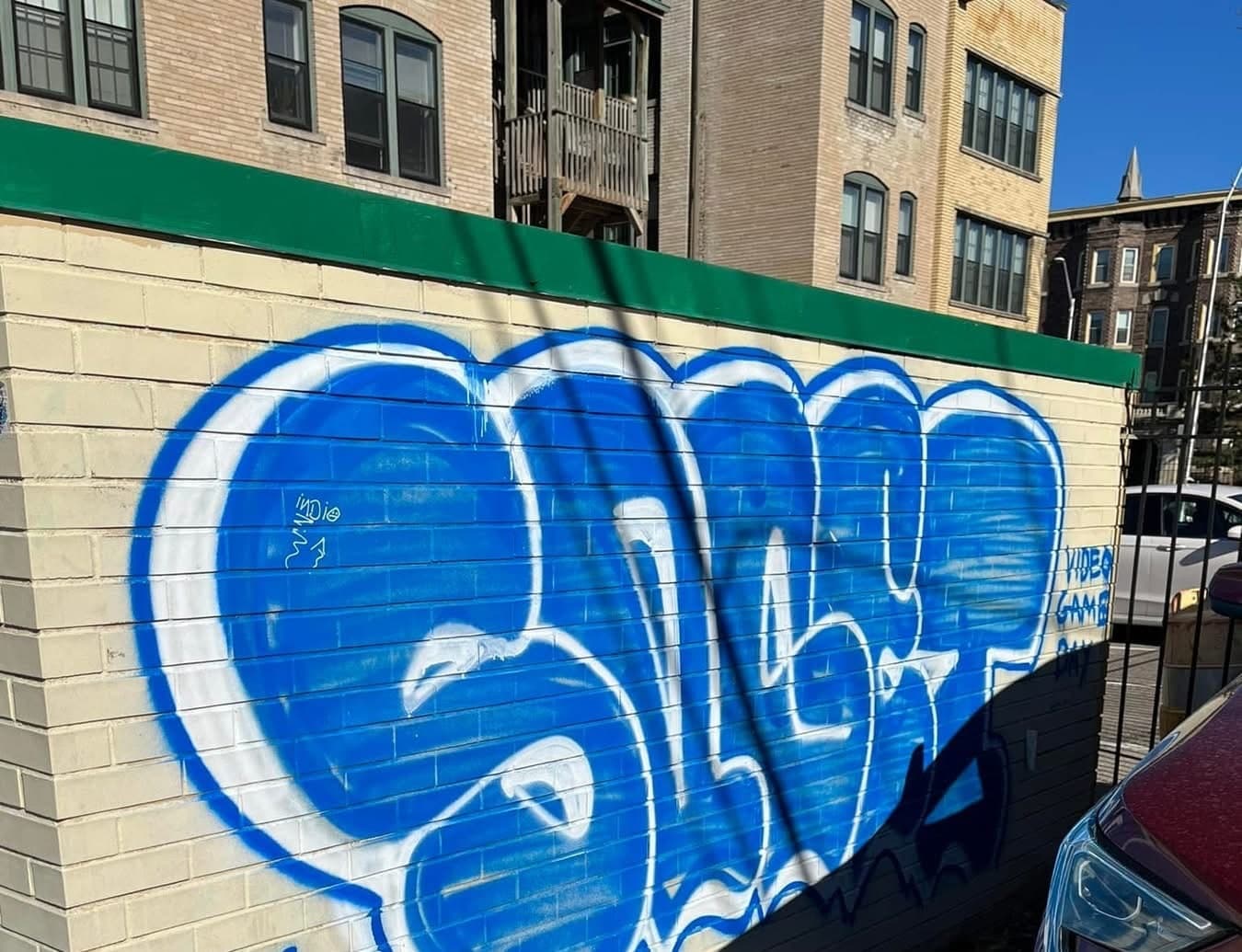
Somebody hit the back elevation of your building over the weekend. Photo in your inbox, tenant asking, budget holder wanting a number. Short answer: no Charleston or North Charleston ordinance gives you a removal deadline on an occupied commercial building, so the pressure you feel is not a code problem. The clock is practical. Every day a tag stays up raises the odds of a second one, and paint that has sat takes more aggressive work to lift.
Two things set the invoice on graffiti removal in Charleston. Speed is one. The bigger one is what the paint landed on. Same can, a powder coated roll-up door off Rivers Avenue versus unsealed brick near upper King Street: two different jobs.
Nobody in Charleston is holding a stopwatch on you
I read both codes before writing this, because contractors quote imaginary ordinances constantly. A full text search of the current City of Charleston Code of Ordinances, codified through Ordinance No. 2026-092, returns seven hits for the word graffiti, and none sets a removal deadline for an occupied private commercial building. Sec. 2-395 makes the Livability Division responsible for "Responding to graffiti complaints and removing graffiti from public property." Public property. Do not wait on the city to clean your wall.
Three exceptions, and one of them can reach an occupied commercial property. Sec. 54-204.2 makes "the owner and operator of any lot on which a portable storage unit is placed" responsible for keeping that unit free of "graffiti, rust, ripping, tearing or other holes or breaks, at all times." If there is a pod sitting behind your center, that one is yours. The other two are narrower. Sec. 21-54 requires a building vacant over thirty days to get "Prompt and regular removal of all exterior trash, debris, and graffiti," no hour count attached. The dumpster article requires containers kept clear of graffiti, but Sec. 19-491 limits it to dumpsters on public property and rights-of-way, and the permit article it sits in runs on rights-of-way, so a corral on your own pad generally sits outside it. That is how the article reads, not legal advice. Check your lease and call Livability before you bank on it.
North Charleston is thinner still: graffiti appears exactly once in that entire code, in the small wireless facility rules. State law aims at the vandal. S.C. Code 16-11-770 makes illegal graffiti vandalism a misdemeanor and lets a court order the convicted person to remove it or pay the cost. No owner duty in it, and it was amended in 2018, so check any penalty numbers you are repeating against the current statute. To report a tag, the city's graffiti abatement page lists Livability at 843-805-3226.
The 48 hours are real, but not for the reason you were told
That window is abatement practice, not coatings science. The Department of Justice COPS Office guide on graffiti notes that "many jurisdictions try to remove graffiti within 24 to 48 hours," and points to St. Petersburg, Florida requiring business owners to remove graffiti within 48 hours. Not a Charleston rule. The reason behind it is recurrence: a first tag "appears to attract more graffiti" in that location, and the National Park Service says in Preservation Brief 38 that "Experience shows that prompt removal of graffiti is one of the most effective measures against its recurrence." Both sources hedge, so I will too. COPS says rapid removal "has been shown to reduce its occurrence," then says most graffiti responses "have not been carefully evaluated, and are thus of unknown effectiveness."
Paint does keep hardening, but on the NPS timeline, "several weeks or months," after which solubility drops and removal gets harder. Not hours. Krylon says most of its spray paints are "dry to the touch in 20 to 25 minutes and ready to handle in 1 hour" and gives no full cure time, and its industrial Acryli-Quik data sheet publishes only "To Touch: 12 minutes" and "To Handle: 30 minutes," with no cure figure anywhere on it. Anybody telling you the paint locks in at hour 48 made that up.
What it landed on matters more than what was in the can
Brief 38 is written about historic masonry and says the same guidance applies to non-historic masonry. Polished granite, it explains, is "relatively impermeable and paint vehicles tend to stay on the surface rather than penetrate into microscopic pores," while weathered marble or limestone can be "extremely porous and permeable." The carrier is the mechanism: "The greater the solvent content of the paint, the greater the flow rate," and the deeper it travels. Pigment left below the surface is what stays behind once the visible paint is gone.
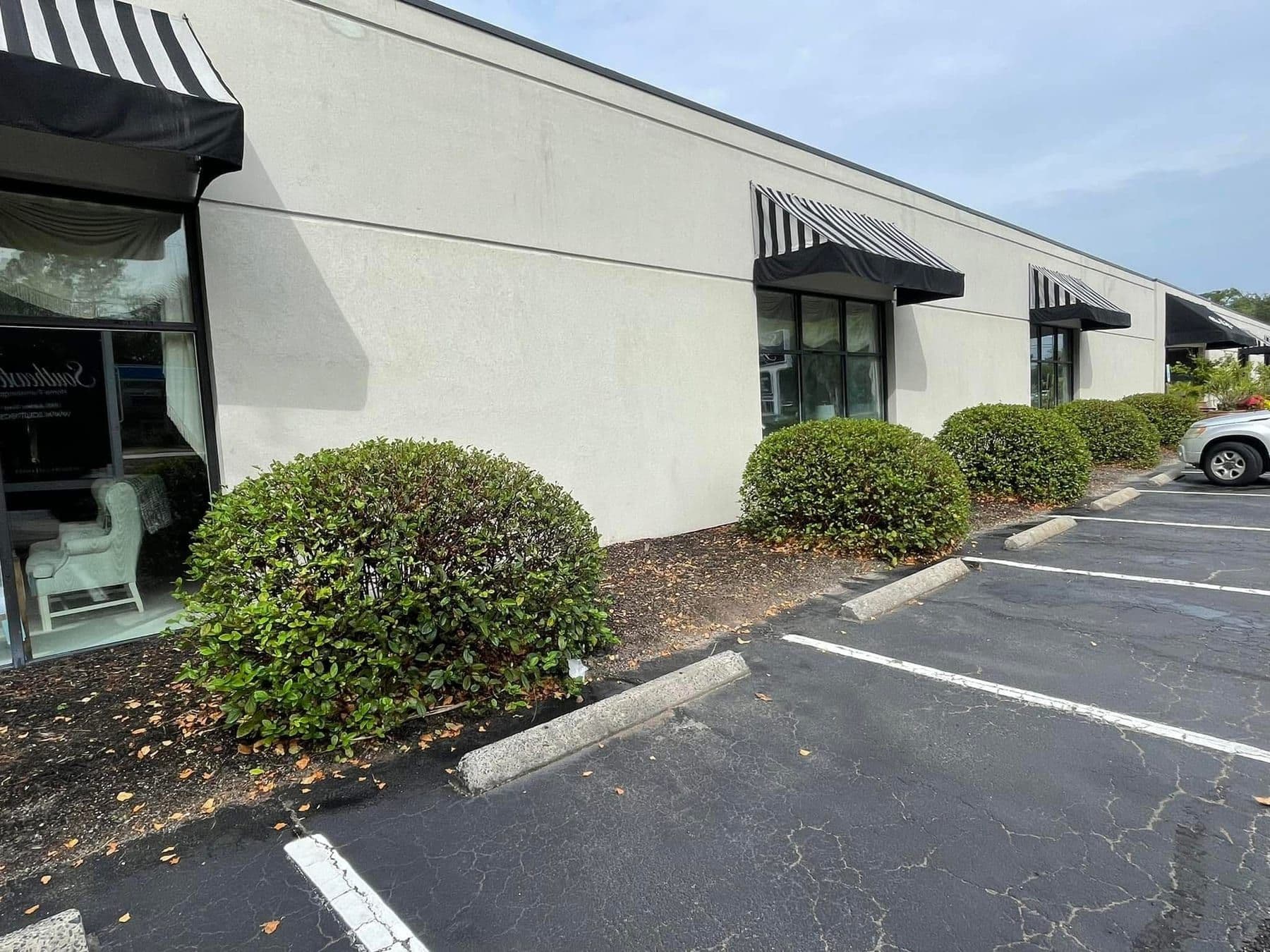
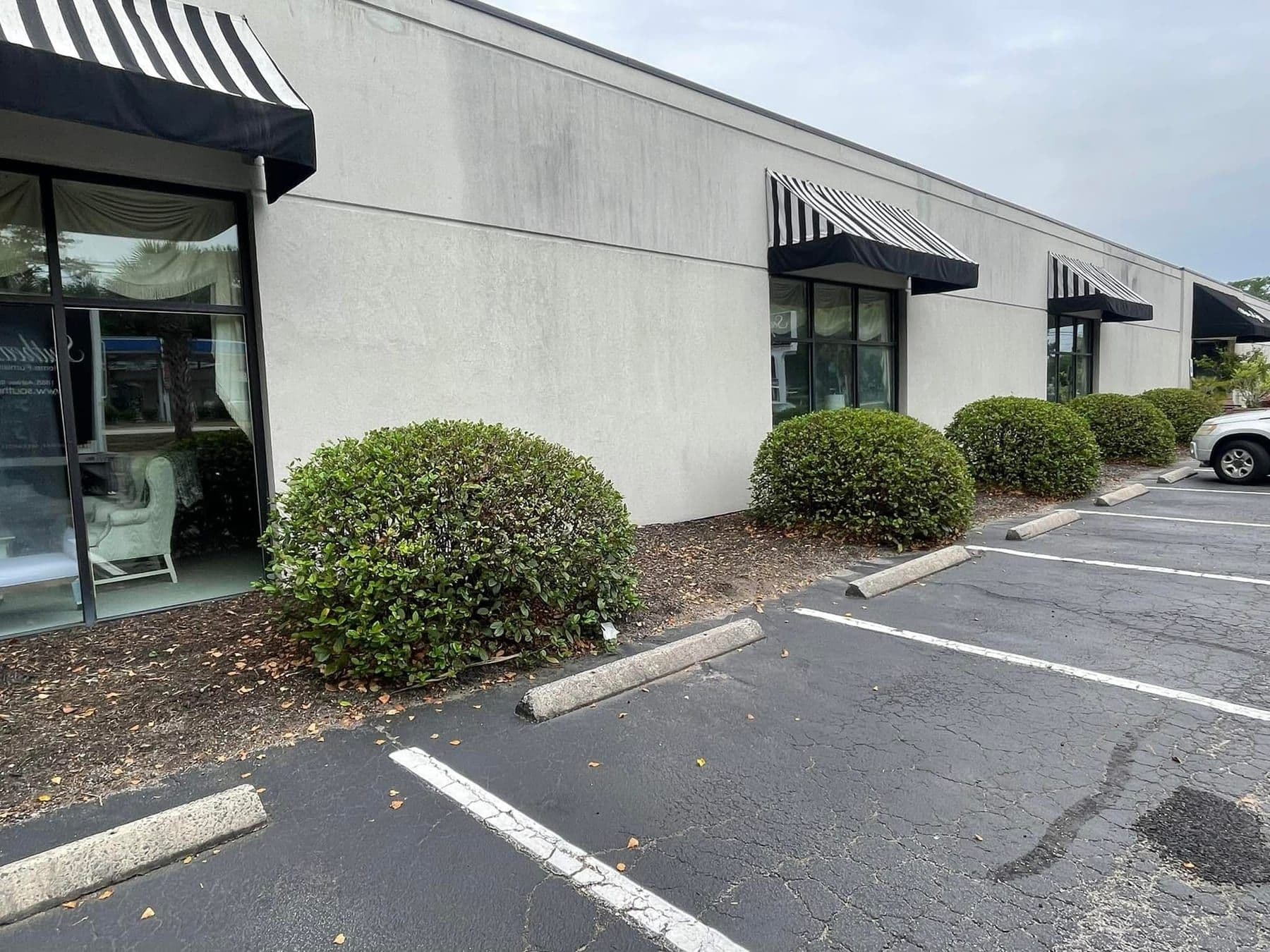
On our jobs it sorts fast. Coated metal, powder coated storefront frames, hollow metal doors, glass and sealed concrete usually come clean with a remover, dwell time, agitation and a rinse. Unsealed brick, split face block and older stucco are the hard ones, and they are most of what got built along the older commercial corridors here. Removing spray paint from brick is where estimates go wrong. That is why our Commercial Graffiti Removal pricing starts with photos of the wall, not square footage of the tag.
Ghosting, and the one thing we will not promise you
The COPS guide is blunt: some removal products on porous surfaces "may create a shadow of the graffiti." NPS says graffiti "ghosts" from red paint or the fine black pigments in spray paints "may be particularly difficult to remove."
Our limit, plainly. On unsealed brick and porous stucco we sometimes cannot take it all the way out. A faint shadow stays in the pores, and our re-do guarantee does not change that, because a second visit will not pull pigment back out of masonry that already drank it. We say so before we start. What a return trip can fix is a cleaned patch reading lighter than the wall around it, and that is Commercial Building Washing work, scoped separately.
If you are handling it in house, do these five things
Plenty of operators hit small tags themselves with a remover from the janitor closet. Reasonable. Do it in this order.
Test first. NPS says to test on areas "not highly visible, but which are representative of typical conditions," with the accepted sample approved in writing. On a multi-tenant property, that sample stops an argument later.
Gentlest method that could work. Brief 38 says fresh graffiti one or two days old made with water-soluble markers may sometimes be removed with water, aided by a neutral or non-ionic detergent. Read the scope: markers, not spray paint.
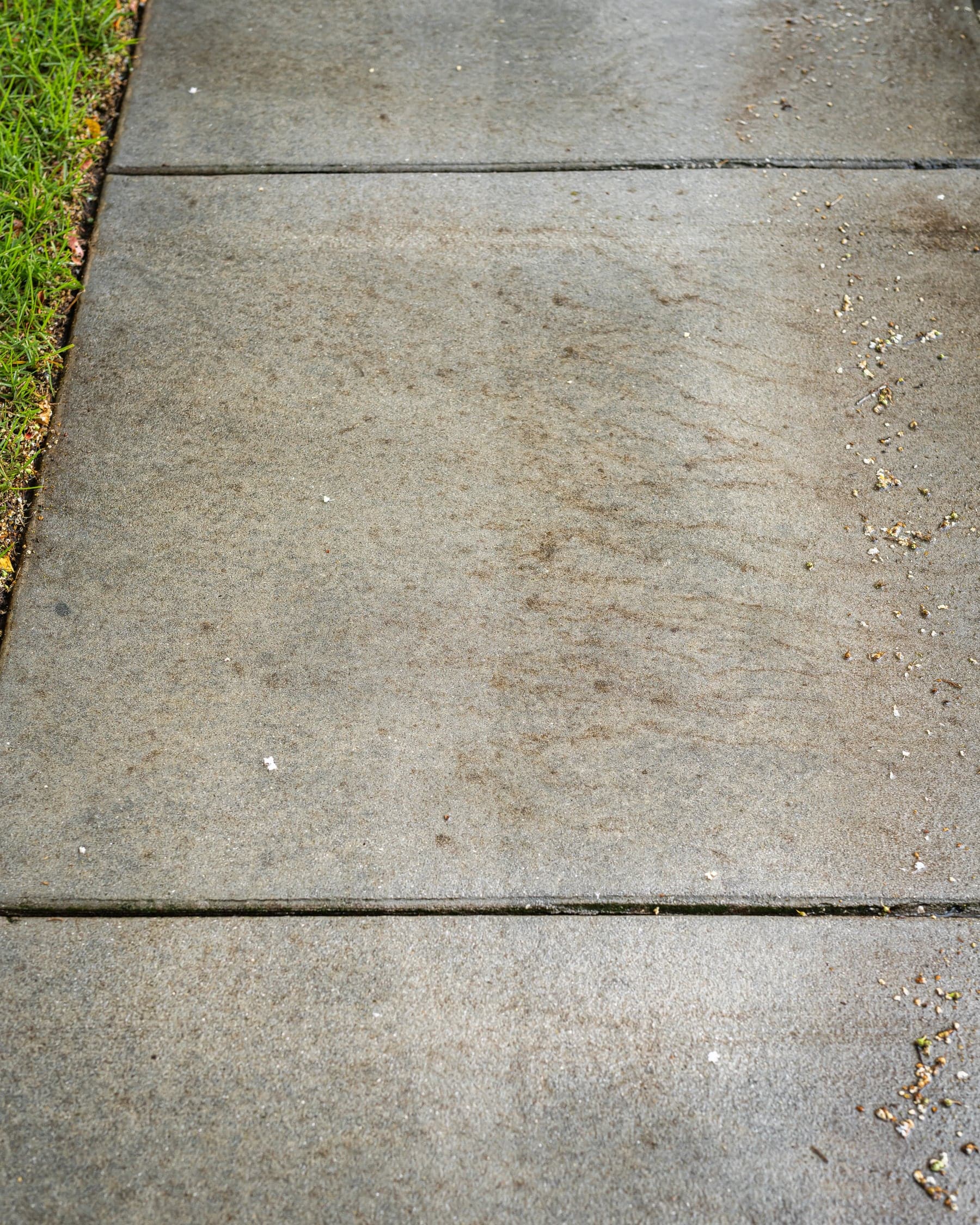
Contain the rinse water. NPS notes it is "illegal to discharge solvents and/or paint residues into sewers or storm drains" in many places, and that the owner or the firm doing the work is responsible. Same thinking as the wash water and stormwater rules on a dumpster pad, except graffiti effluent is dirtier.
Do not blast masonry. NPS says abrasive methods and high-pressure water washing damage masonry and "in most instances, should never be considered as a method of removing graffiti from historic masonry," and warns that some historic masonry is easily damaged "even at low or moderate pressures (100-400 psi)." Untrained abrasive work etches the outline in permanently.
In the Old and Historic District, call before you coat or overpaint. Ordinary maintenance is exempt under Sec. 54-242, but Sec. 54-232 requires Board of Architectural Review approval before "the exterior architectural appearance of any structure which is visible from a public right-of-way" is altered, and Sec. 54-231 defines that appearance to include "the kind, color and texture of the building material." Cleaning is routine. A coating is a conversation. Ask the City of Charleston Department of Planning and Preservation, not me.
Coatings, and when paint beats removal
If one elevation gets hit over and over, a coating becomes arithmetic. Sacrificial coatings come off with the graffiti and get reapplied; permanent ones stay on the wall, though NPS says even those "must usually be reapplied after several cleanings." Either way the next tag generally comes off with low-pressure water and a detergent. Read the warnings too. NPS says such coatings "are not the panacea that some advertising might suggest," that clear ones may alter color, add gloss, cut water-vapor permeability and discolor over time, and that those drawbacks generally rule them out on historic masonry.
Sometimes the honest answer is paint. NPS says a vapor-permeable pigmented barrier coating may sometimes serve as a permanent barrier on non-historic masonry "where there is frequent recurrence of graffiti, and when constant surveillance is not possible." Painted block at a loading dock is that condition. Felt markers bleed through, though, and a patch "tends to attract more graffiti unless the paint can be applied in a discrete, and well-defined area." On color, the COPS footnote is the working rule: paint-over colors "should closely match, rather than contrast with, the base."
The first day, in order
Photograph it before anyone touches it, straight on and again at a raked angle so texture reads. File the police report if you want a shot at restitution under the state statute. Call Livability if part of it ran onto a pole or a sidewalk the city owns. Then identify your substrate before anybody picks a chemical, because that decision is the one that costs money.
Want a read on whether your wall will ghost? Send photos and the address through our quote form or call 843-696-4739. We will tell you what comes off, what probably will not, and whether the answer is removal, concealment or a coating. Costs nothing, and it is useful even if you hand the job to somebody else.