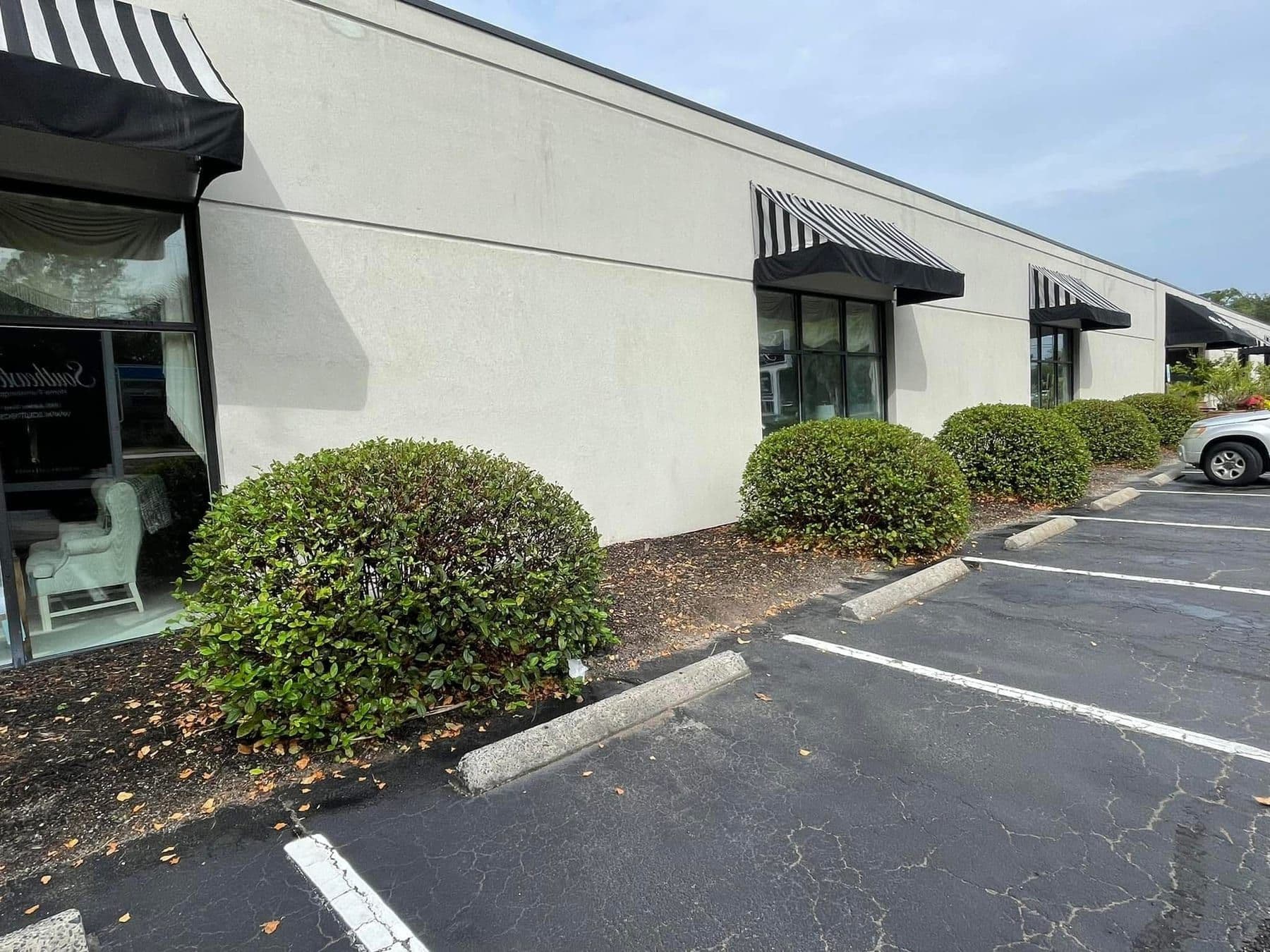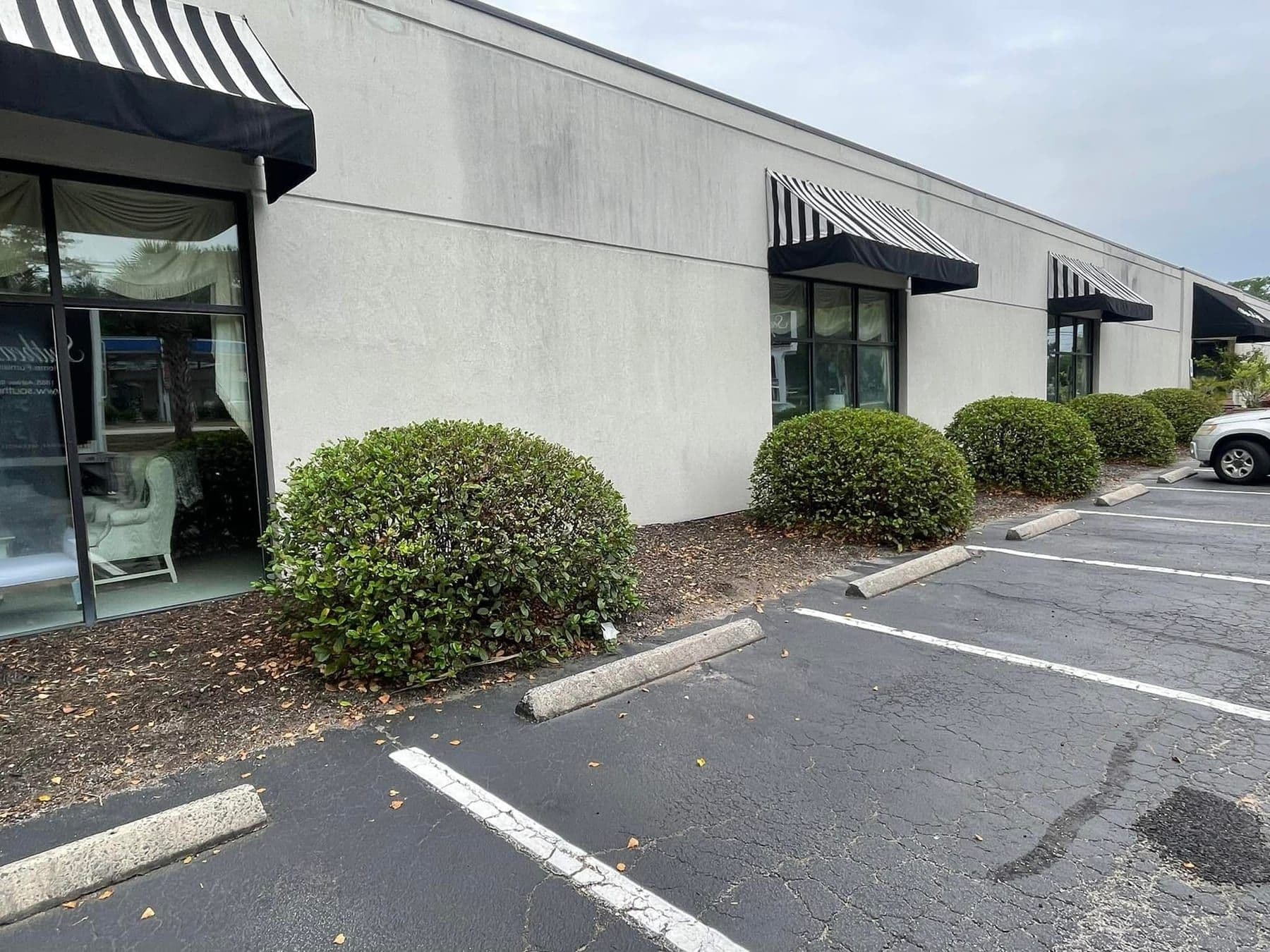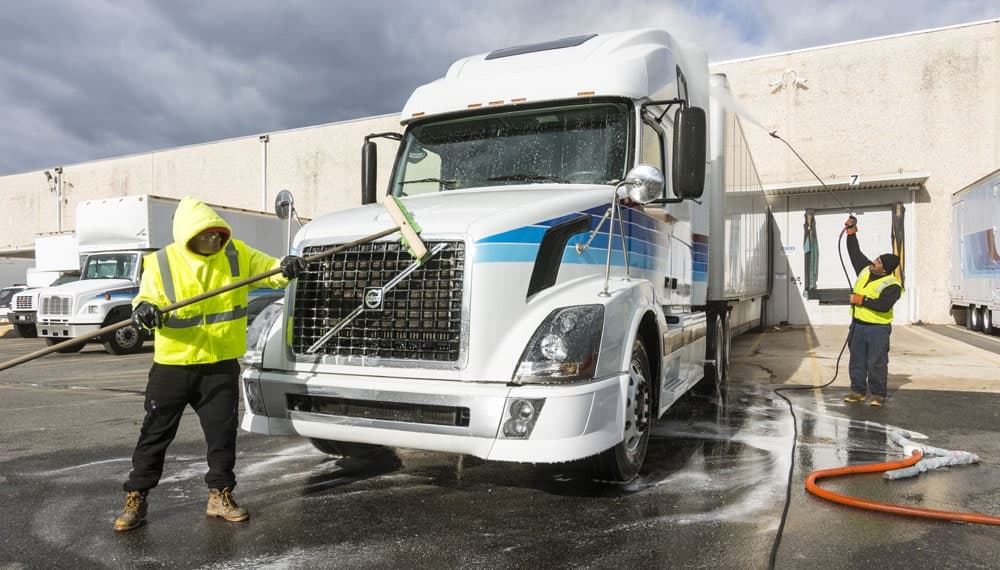
Every site has one slab nobody put in the budget. On a warehouse it is the apron, the concrete in front of the dock doors where the trailer sits. The roof gets inspected. The lot gets sealed and striped. The apron just gets used, all day, by equipment that leaks as a normal condition of working.
Short answer first. You can usually wash a Charleston-area dock apron, but the wash water is the regulated part, not the dirt, and the order of operations decides whether what you did was a cleaning or a discharge. South Carolina runs its own industrial stormwater program, so your governing document is the SC DES general permit SCR000000, good through June 30, 2027, not the federal EPA permit most articles cite. Dry cleanup first. Water second. Know which permit box your building sits in before anybody pulls a hose.
What actually lands on that slab
Warehouse pressure washing in Charleston mostly comes down to this strip. Hydraulic fluid off the levelers and off trailer tails. Diesel, DEF, gear oil. Tire polymer, the black sheen that builds in the exact arc where a trailer pivots to line up on a door, which a broom does nothing about. Steel scarring where landing gear drags the same two lines into the pour. And condensate, running off every refrigerated trailer the whole time it sits.
That last one is worth a second. SCR000000 allows "uncontaminated condensate from air conditioners, coolers, and other compressors," and defines uncontaminated as free from pollutants attributable to industrial activity. Condensate on clean concrete is one thing. The same water crossing a stained apron toward a drain inlet is a harder argument, and you are the one making it.
There is a lot of this concrete here. SC Ports reported 2.6 million TEUs in fiscal year 2025, up 3 percent, and it shows up as buildings off Rivers Avenue, through Northwoods, out toward Nexton, which is where most of our industrial and warehouse cleaning happens.
The permit that governs you is South Carolina's, not EPA's
EPA is the permitting authority in only a handful of states and South Carolina is not one. EPA's own industrial stormwater page says most industrial facilities will need to obtain NPDES permit coverage through their state. If a binder on your shelf cites the federal Multi-Sector General Permit, that is national context, not your obligation.
What SCR000000 says about pavement is narrow, and it is the rule that matters most for loading dock cleaning. Pavement wash water is allowable "where no detergents or cleaning products are used" and where the wash waters "do not come into contact with oil and grease deposits," unless those residues are first cleaned up using dry clean-up methods, with control measures in place to hold back mobilized solids.
Read that and the sequence writes itself. Pick up the oil, then wash, and skip the soap.
If your facility falls under Sector P, Land Transportation and Warehousing, the permit gets blunter. Part 8.P.2 says it "does not authorize the discharge of vehicle/equipment/surface washwater," and points those discharges to a separate NPDES permit, to sanitary sewer under pretreatment rules, or to on-site recycling. Surface. I read that as reaching an apron, not just a truck. Confirm it with whoever signs your SWPPP, because I am a contractor and not your environmental consultant. Same wash water logic as the stormwater rules behind a dumpster pad, with more oil in it.
Which box your building sits in, and why people guess wrong
Sector P, Land Transportation and Warehousing, is wider than the name suggests: SIC 4011 and 4013, 4111 through 4173, 4212 through 4231, 4311, and 5171. The warehouse codes are subsector P1, 4212 through 4231. But the definition of industrial activity excludes 4221 through 4225, warehousing and storage, from the transportation-facility category and lists those codes under light industry instead. A distribution center is not swept in merely because trucks show up. Plenty of buildings carry no permit at all under the conditional no-exposure exclusion, which requires that all industrial materials and activities sit under a storm-resistant shelter, recertified every five years.
So pull your own permit paperwork, or call SC DES. I will not interpret your coverage for you. What I will say is that the language runs toward scheduled work rather than a call after a spill: good housekeeping tells you to "keep clean all exposed areas that are potential sources of pollutants," and Sector P lists "cleaning pavement surfaces to remove oil and grease" among measures to consider around vehicle and equipment storage.
OSHA reaches the apron, just not with the paragraph you were quoted
Under 29 CFR 1910.21 and 1910.22, a walking-working surface is "any horizontal or vertical surface on or through which an employee walks, works, or gains access to a work area or workplace location." Outdoors counts. So (a)(1) applies, requiring surfaces be "kept in a clean, orderly, and sanitary condition," and so does (a)(3), requiring they be "maintained free of hazards such as sharp or protruding objects, loose boards, corrosion, leaks, spills, snow, and ice."
Read that list again. It names leaks and spills. It does not say oil, it does not say grease, and it does not say slip and fall, whatever a dock-equipment vendor blog told you. The clean-and-dry paragraph people love to quote is (a)(2), written for "the floor of each workroom." Indoor paragraph. Not your apron.
The one you want is (d): surfaces "inspected, regularly and as necessary, and maintained in a safe condition," with hazardous conditions corrected before an employee uses the surface again. And 1910.22 is current. OSHA's April 2026 proposed rule touches only the fixed-ladder deadline and restates that 1910.22 still applies.
Oil probably is not eating your slab
I have heard people in my trade tell a facility manager that oil eats concrete. I have probably said something close to it myself. It does not hold up. The Portland Cement Association guide to the effects of substances on concrete lists the effect of gasoline, kerosene, lubricating oil, machine oil and mineral spirits on concrete as "None." The one petroleum entry carrying a damage note is mineral oil, "Slow disintegration if fatty oils are present," and a footnote adds that lubricating and machine oil may contain vegetable or fatty oils the concrete should be protected from.
The honest durability argument is quieter and it holds. PCA points to routine sweeping and washing, plus wiping spills up immediately, as a way to limit chemical attack and abrasion instead of installing a barrier system. Oil that soaks in becomes next year's problem, because prep for anything applied later needs "a firm base free of grease, oil, efflorescence, laitance, dirt, and loose particles." Seal, coat or patch that apron someday and the oil in it right now is what ruins the job.
The same document warns off two methods you may get sold. Hydrocarbon solvents dissolve the contaminant and can carry it deeper into the pores. Acid treatment may not leave a proper surface for mechanical bond. Water blasting fares better, grouped with the methods that minimize cracking of the substrate.
Run it yourself, in this order
You do not need a contractor for a light program.
Walk it dry. One photo per apron from the same spot, door number in the frame, note which inlets sit downgradient, and find the leaking equipment above each stain.
Pick up the free oil before water touches it. Absorbent and sweeping, then hydrophobic rags, which are the permit's own examples of dry clean-up.
Protect the inlet with whatever your SWPPP already specifies. The permit's examples of controls are filtration, detention or settlement.
Decide about detergent before equipment. Ours are biodegradable and plant safe, which matters around tenant doors and landscape beds, and it changes nothing here. The permit does not ask whether a product breaks down. It asks whether cleaning products were used at all.
Heat and flow beat raw pressure on tire polymer. Hot water under a surface cleaner pulls more film than a narrow tip at maximum pressure, and it will not stripe the slab.
Work away from the inlet, never toward it.
Log it. Sector P already makes you inspect loading and unloading areas and map them on the SWPPP site map, so the record hangs off paperwork you keep anyway.
Scheduling around doors that never close
The constraint is never the concrete. It is the trailer parked on it.
Take doors out of rotation in small groups rather than shutting the dock face, starting where your shift supervisor is least likely to need one next, and get the pivot arc while the door is open instead of chasing the whole slab. Night windows help with traffic, but a dark apron hides the exact film you are trying to remove, so for industrial pressure washing in North Charleston I would rather have early morning light and a slower door. And if tractors and trailers get washed on the property, Sector P names vehicle and equipment wash water right beside surface wash water, so washing your fleet on site is its own conversation.
Where we stop
We clean the surface. That is the whole scope. We do not repair spalled concrete, patch joints, or fix the leveler dripping hydraulic fluid onto the slab. If the equipment is still leaking, we will be back next quarter looking at the same stain in the same place, and I would rather say that now than sell you another cleaning. We also do not write your SWPPP or choose your discharge route. That is your environmental consultant or SC DES.
A next step that costs nothing
Walk your dock face on a dry morning with your phone. One photo per door, the number in the frame, a note on what sits above each stain. That document separates a cleaning problem from a maintenance problem, and you will have it before any contractor shows up to tell you which one it is.
If you want another set of eyes, we will walk it with you and put the scope in writing. Ask us for a quote or call 843-696-4739. Certificate of insurance before work starts, $2,000,000 general liability, additional insured when your management company requires it. If something is not right, we come back.