Nobody calls me about a parking deck because the concrete looks dingy. They call because a tenant complained, an inspection landed on the calendar, or somebody finally read the maintenance clause in the lease. And the first question is never the price of the cleaning. It is how many spaces come out of service, and when they come back.
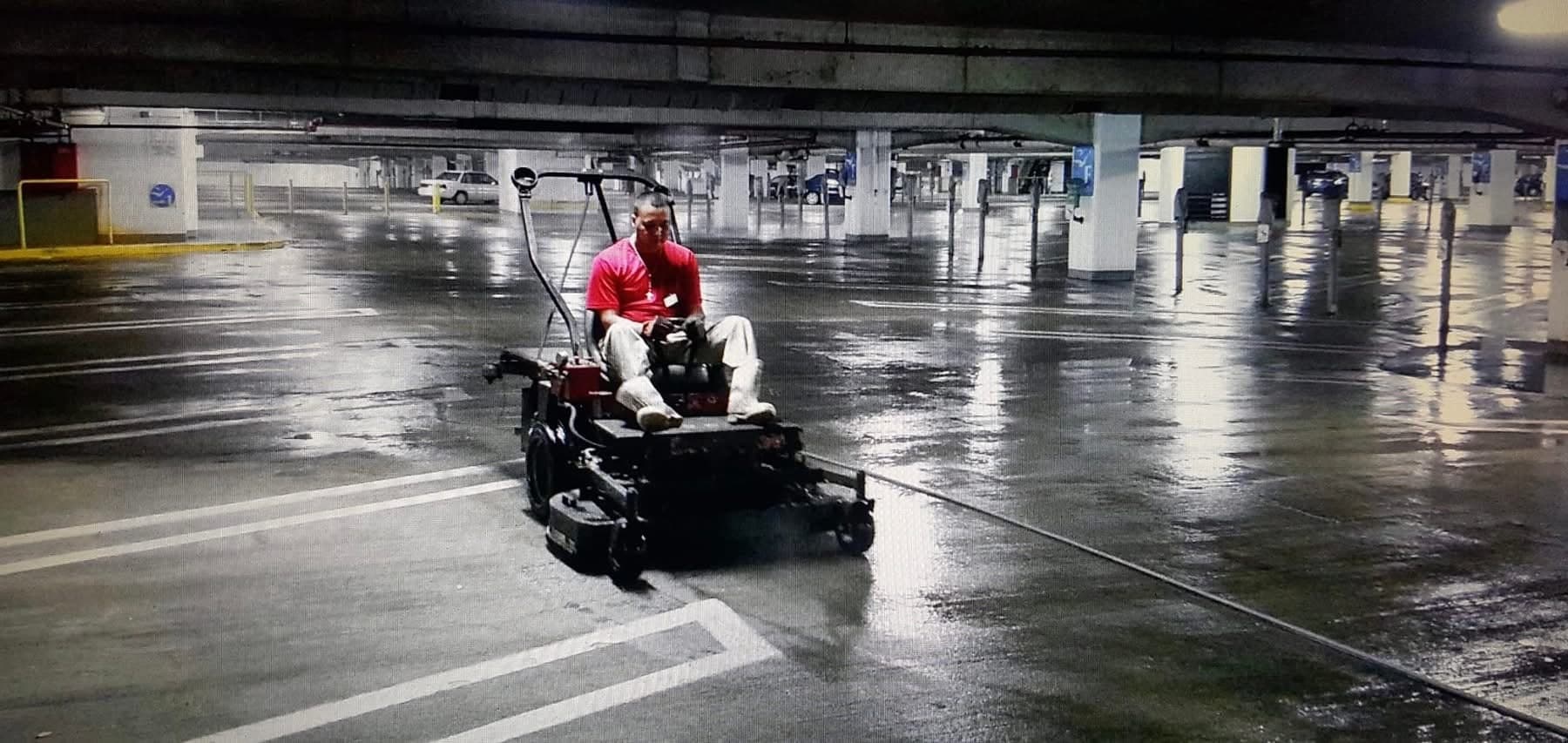
You should not have to close the deck. We phase it: one level at a time, one bay group at a time, on overnight and low-occupancy windows, with cones and signage moving ahead of the crew so the closed zone travels instead of squatting on your busiest floor all night. Somebody who usually leaves the car on three might need four for a night. Planned properly, that is the whole disruption.
The hard part of a garage is not the washing. It is knowing where the water on each level goes before anyone opens a valve, because on an elevated deck that answer can change floor to floor.
Phasing is a parking plan before it is a cleaning plan
Before I price a phased job I want three things: a stall count by level, the occupancy curve by hour (the access control software usually has it, and if it does not, the attendant knows it cold), and which tenants park where. Then the deck gets cut into zones small enough to close and reopen inside one shift, sequenced around deliveries, shift changes and events.
Operators publish these notices constantly, which helps if you need to show a board that this is normal. The University of Minnesota's parking department tells drivers plainly that areas "will be closed overnight for cleaning," that drivers staying past 7 p.m. "may need to park on a different level than usual in your assigned ramp/garage," and that "signage will be posted in advance of any closures." The University of Kentucky ran phased partial closures across its parking structures, blocking a slice of one garage while another was reduced to its first level. That 2015 job was a protective floor coating rather than a wash, so read it as evidence that partial closures are ordinary practice, not as a washing benchmark.
What I will not do is put a space count or a shift length in a blog post. It depends on deck geometry, drain layout and how the floor is striped. Anyone quoting production rates before walking your structure is guessing. Our Parking Lot & Garage Cleaning scopes get written after the walk.
Find the drains before you find the dirt
At grade, water goes where the site storm system takes it. On an elevated deck, levels can be piped differently, and there is no national rule. The model code sets up the tension by itself: the 2021 International Plumbing Code says "Floor drains shall not be connected to a storm drain," and also that "Storm water shall not be drained into sewers intended for sewage only."
Jurisdictions then resolve that in opposite directions. New York City's plumbing code says garage floor drains "shall drain to the storm drainage system," with an exception routing them to sanitary where the storm system discharges to a dedicated storm sewer. Seattle splits the structure by rain exposure, sending areas over 200 square feet that are exposed to precipitation to the building storm drainage system and all other garage drainage to sanitary through a sand interceptor or oil/water separator. Plumbing engineer Timothy Allinson described the same split in trade press: some jurisdictions combine every level into the site storm system, others require the top level to storm and the covered levels to sanitary "since they do not receive direct rainfall."
Institutional standards follow that shape. The University of Michigan's parking structure design guideline puts roof level drains on storm and lower supported levels on sanitary with an oil separation system, and specifies a dedicated 1 1/2 inch washdown system on each floor with hose connections placed so no part of the structure sits more than 100 feet from one.
So the first hour on site is a drain walk with drawings open. Top level and covered levels are frequently piped differently, and you confirm which before the first gallon, not after.
The wash water question, which nobody gets to skip
Federal law is the root. The Clean Water Act requires municipal storm sewer permits to include a requirement to "effectively prohibit non-stormwater discharges into the storm sewers". EPA's rules define an illicit discharge as any discharge to a municipal separate storm sewer "that is not composed entirely of storm water" except discharges under an NPDES permit. The short federal list of flows a municipality only has to address where it identifies them as pollutant sources covers "individual residential car washing" and "street wash water." Commercial washing of pavement or vehicles is not on it. EPA's model illicit discharge ordinance puts "non-commercial washing of vehicles" on its exempt list and leaves commercial washing off it, and it treats conveyances that let wash water enter the storm drain system as illicit connections.
South Carolina's small MS4 general permit requires owners or operators "to effectively prohibit non-stormwater discharges" into their systems, with an allowable list that runs through residential car washing and street wash water. Fair warning on that document: the posted version was effective 01/01/2014, shows an expiration of 12/31/2018 and appears administratively continued, and SCDHEC became SCDES on July 1, 2024. Verify the current version before you lean on it.
Locally, the City of Charleston runs an MS4 under NPDES Certificate SCR031901. Its 2014 Stormwater Management Plan quotes City Code Section 27-40 making it unlawful "to connect any pipe, open channel, or any other conveyance system that discharges anything, except stormwater or other approved discharges" into a City stormwater system, and lists car wash wastewaters among typical illicit discharges. That plan is eleven years old, so treat it as direction rather than current code text. I am not your lawyer. Call the stormwater office for your building's jurisdiction and read your own lease, since on multi-tenant property those obligations get split by lease language rather than by common sense. Same reasoning we worked through for wash water and stormwater rules on a dumpster pad, just with more elevation.
One more useful datapoint: a Maryland sewer utility regulates mobile power washing by name and lists "parking garages" under surface cleaning, stating that "virtually all outdoor drains in streets, parking lots, and elsewhere are storm drains which may not be used for wastewater disposal," and allowing sanitary discharge at the customer's site with the customer's permission, or at the washer's own facility through a private connection. That is WSSC's jurisdiction, not law here. For a Charleston building, the sewer side of the conversation goes to Charleston Water System, which the City's own plan identifies as the regional water and sewer provider.
Run the washdown yourself, or write a scope somebody has to meet
This part is worth having whether you ever hire a contractor or not.
Start at the top level and work down. The Precast/Prestressed Concrete Institute's maintenance manual for precast parking structures says flushing "should start by cleaning at the top level."
Use volume, not a garden hose. That same manual calls a 1 1/2 inch diameter hose generally adequate and states flatly that "garden hoses are not adequate for cleaning decks."
Screen the drains before flushing. PCI calls for floor drains "protected by screens to prevent clogging." WSSC goes further for anything bound for sanitary, asking that debris pass a 20 mesh or finer screen first.
Contain and recover where the drain runs the wrong way. EPA's containment guidance (written for municipal vehicle and equipment washing, not for garages, so borrow the technique and not the title) describes a bermed wash area with a wet/dry vacuum for small jobs and berms plus a vacuum truck for larger ones, with the recovered water going to sanitary and the sewer authority's permission obtained first because wash water may have special treatment requirements. It also says to clean detergent off the pavement so it does not discharge during the next storm.
Do not blast the sealants. PCI: "Care should be taken to avoid damaging sealants and coatings with high-pressure water jets."
Get the shelves under the deck line. Bearing ledges and corbels collect what the deck sheds.
Use the hose bibs if you have them. IPMI's design committee recommends water bibs adjacent to every floor slab specifically so a washdown program can run, plus a 2 percent slope to drains to avoid ponding.
We run hot water on oil and on the rubber tires lay down at ramp transitions. That is our equipment preference and our field experience, not a code requirement, and I do not have a published study to hand you on it. We use plant-safe surfactants and biodegradable detergents, which matters where landscaping sits at the base of the ramp.
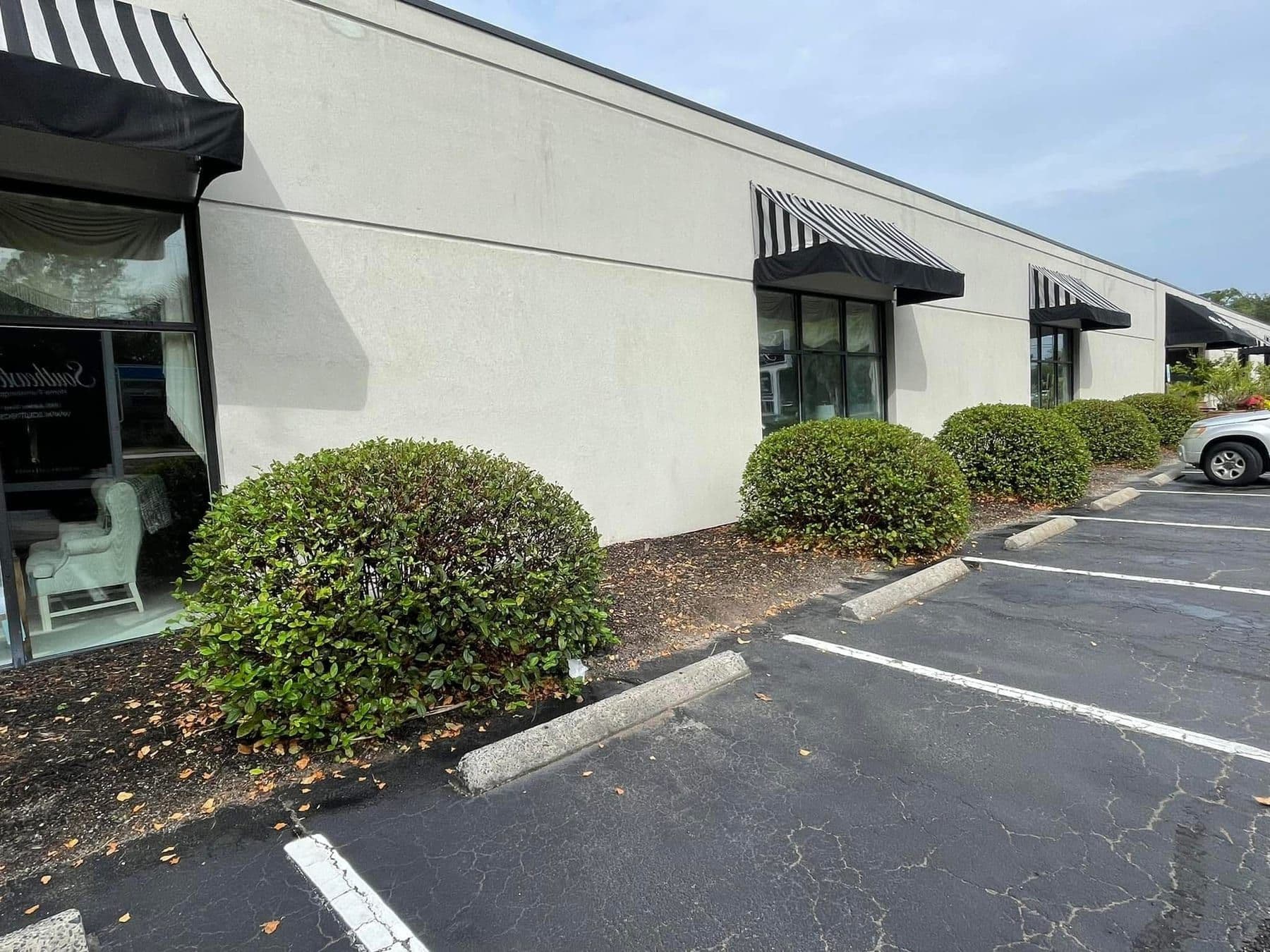
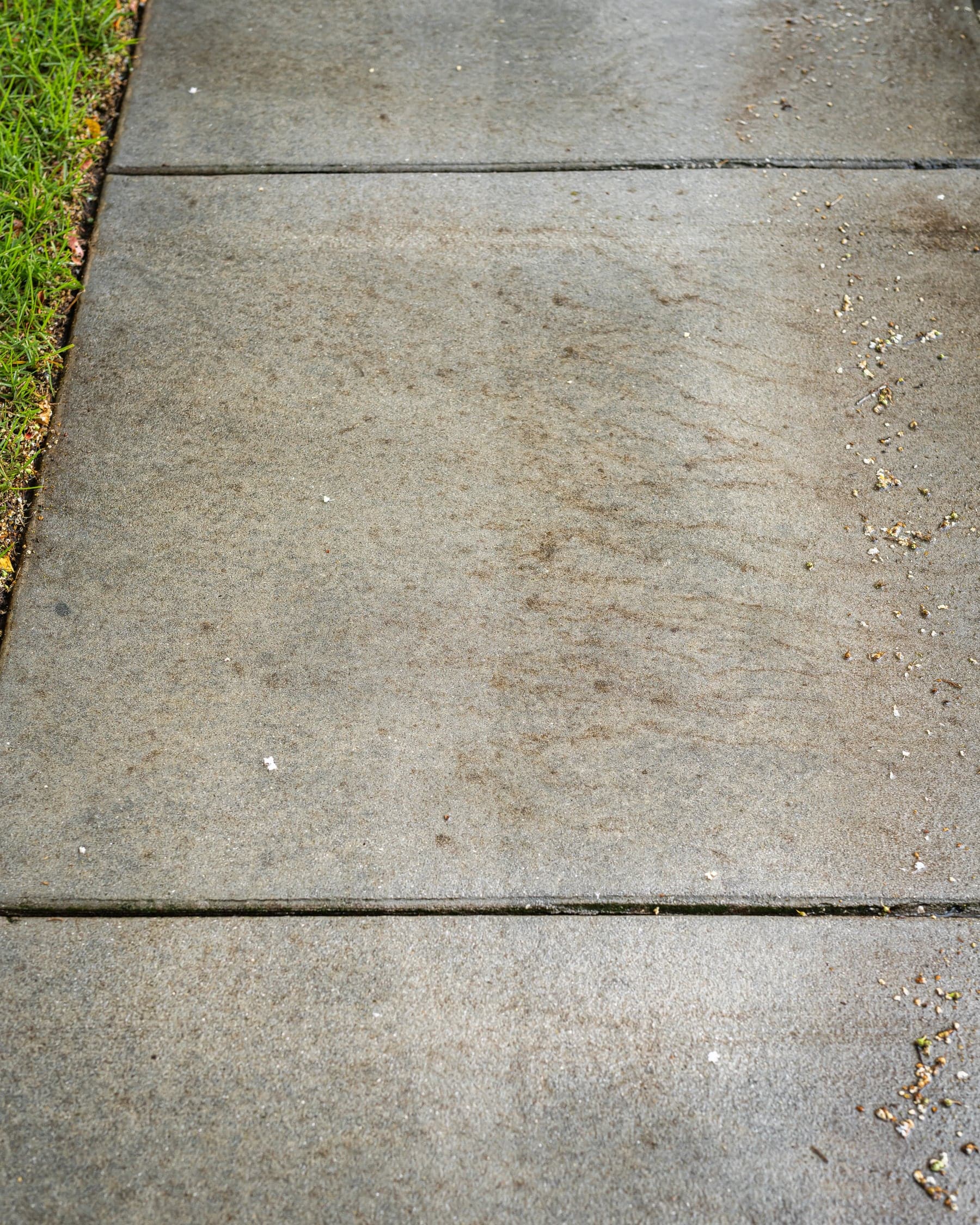
Surface lots are a different animal. Most of what gets sold as parking lot cleaning in Charleston, SC is at grade, and commercial parking lot sweeping (removing debris) and washing (removing what soaked in) are two line items on two schedules. Retail centers usually want the walkways handled the same night, which is a separate scope from the deck; that lives under Shopping Center Cleaning.
How often a Charleston deck actually needs it
PCI's maintenance manual sets the frequency: wash-downs "twice per year (spring and fall) in snowy or coastal regions, and at least once per year elsewhere," with the semiannual schedule applying to structures near coastal seawater and the annual one to structures more than 15 miles from it. Downtown Charleston, Mount Pleasant along Coleman Boulevard and Shem Creek, Daniel Island, James Island and North Charleston all sit comfortably inside that. Summerville and Goose Creek are a judgment call, so measure from your own building.
Ignore the deicing salt content you will find elsewhere. We do not have a salt season. The relevant path here is airborne chloride: PCI's design recommended practice notes that "in coastal areas, airborne salt from the ocean can also cause corrosion," and defines exposure zones by distance to salt water, within half a mile and from half a mile to three miles. ACI's guide for structural maintenance of parking structures-en.pdf) lists wash-downs among preventive maintenance features and recommends a walk-through visual inspection at least annually. The current edition of that guide is ACI PRC-362.2-21.
Washing is one line in a longer program. PCI's schedule puts surface sealer at every three to five years, penetrating sealer at five to seven, and traffic-bearing membranes inspected twice a year with recoating or replacement planned at least every ten.
Ponding is a structural conversation, not a cleaning one
PCI's design manual says proper drainage is mandatory "to eliminate ponding water which promotes the absorption of deleterious chlorides into the concrete," and documents that water-soluble chloride ions above 0.2 percent by mass of portland cement can accelerate corrosion of the steel, which expands and cracks and delaminates the concrete around it. On a post-tensioned deck there is a sharper reason to pay attention. ACI's guide calls corrosion of unbonded post-tensioning tendons a special case: tendons "can corrode or even fail without cracking or delaminating the surrounding concrete."
So when I find an area holding water after the rest of the deck has dried, I photograph it and send it to you, and it goes to your structural engineer. I am not qualified to tell you what it means. No washing contractor is.
The one thing I will not promise
A deck that has never been washed will not come back to new in one pass. I have never seen it happen. Oil that soaked in over years, staining under the stall lines, rubber built up on the ramps: the first clean is a large visible improvement and still leaves you with a floor that looks like it has a history. The second visit, on a coastal semiannual schedule, is where a deck starts reading as maintained. And some of what looks like dirt is not dirt. Scaling and spalling get fixed with patching and overlays, not with water, and PCI's warning about high-pressure jets and coatings means the honest answer on some panels is to back the pressure down and accept a partial result.
A next step that costs you nothing
Walk your deck with a drain map and a pen. Note which levels have hose bibs, where water still stands the morning after rain, and which bay groups could close overnight without a fight from a tenant. That one page is most of what any contractor needs to build a real phasing plan, and it is useful to you either way.
If you want somebody to do that walk with you, ask for a quote or call 843-696-4739. We are fully insured at $2,000,000 general liability, the certificate goes out before work starts, and we can name your entity additional insured when a management company requires it. If something is not right when we are done, our crew comes back.